

















How to Clean a Cast Iron Skillet: The Ultimate Cast Iron Care Guide
Cast iron skillets are absolute favorites among home cooks and professional chefs alike. Their legendary durability makes them a kitchen staple, but cleaning, restoring, and maintaining them can often seem incredibly tricky to master. You might have heard endless internet debates about using dish soap on cast iron, or questions about cooking highly acidic foods like tomatoes in them. Don’t worry about the myths, though. Using, washing, and caring for cast iron pans is significantly simpler than you think. In this comprehensive maintenance guide, we will show you the exact, straightforward steps on how to clean cast iron, ensuring your skillet stays in top-tier shape for all your culinary adventures.
Here is the exact step-by-step process to correctly wash, scrub, and protect your cookware:
How to Season Cast Iron for a Perfect Non-Stick Finish
Before any frying or searing can begin, cast iron pans must be thoroughly and deeply seasoned, even if they come pre-seasoned from the manufacturer. Follow these exact culinary steps to build a bulletproof layer of seasoning on your cast iron:
- Preheat your kitchen oven completely to 200°F.
- Wash the raw pan thoroughly with hot water and a mild dish soap, then completely towel dry the pan.
- Place the pan directly in the preheated oven for 10 minutes to expand the iron pores and ensure it is completely dry. Remove the pan safely from the oven.
- Increase your oven temperature setting to 500°F—or the maximum temperature setting if your appliance doesn’t reach 500°F.
- Wipe the entire pan surface with a premium, cold-pressed, unrefined, organic flaxseed oil. Make sure to thoroughly rub it into every single millimeter of the pan, not missing any spots. Note: If you cannot find organic flaxseed oil, you may substitute coconut oil or canola oil, but flaxseed polymerizes much more easily to create the desired glossy, non-stick coating.
- Aggressively wipe down the pan with clean paper towels until you get every last visible bit of surface oil out. There will still be a microscopic layer left behind, but building multiple thin layers of oil will create a much smoother cooking surface than one thick, bubbly, sticky layer of oil.
- Place the oiled pan back into the oven. When the oven safely reaches 500°F or your maximum bake temperature, set a kitchen timer for exactly one hour.
- After one hour has passed, turn the oven completely off and leave the pan inside. Don’t even open the oven door. Allow the pan to cool naturally for at least 1.5 hours or until it is cool enough to safely handle. The finished pan should not look oily or feel sticky to the touch. If it is oily or sticky, you left too much oil in the pan during step 6 and should strip it and start the process over.
- Repeat this exact oiling, wiping, heating, and cooling cycle at least six consecutive times to build a durable coating.
The Real Way to Wash Cast Iron Cookware After Cooking
Many people incorrectly recommend simply wiping out a cast iron skillet with a dry cloth after each use. But no matter how well-seasoned a cast iron skillet is, a quick wipe will not always get the stuck-on food grime off the pan. Contrary to popular belief, you can absolutely use dish soap and warm water to wash a properly seasoned cast iron pan without ruining it. It just needs to be thoroughly and completely dried immediately after washing. Cast iron should NEVER, under any circumstances, be left to sit or soak in water.
Here’s how to properly clean and sanitize your cast iron after dinner:
- After cooking, wipe the warm pan out with a clean paper towel to remove any excess grease, oil, or loose food debris. Hint: getting rid of cooking oil in the trash will save your home’s plumbing and drainage lines.
- Wash the surface with a non-scratch scrubby sponge, hot water, and a few drops of dish soap. Need extra abrasive scrubbing power? Pour out the soapy water, add a couple handfuls of coarse kosher salt, and scrub away the stuck-on bits.
- After thoroughly rinsing the pan, IMMEDIATELY dry the cast iron with a clean towel. Do not ever leave it to air dry on the counter.
- Once the pan is bone-dry, place it back on the stove and turn the burner up to high heat. Add a tiny drop of flaxseed oil or canola oil into the center, and rub it around the interior with a paper towel.
- Keep it on the high heat until the oil begins to smoke slightly, and then allow the pan to cool completely before storing it away.
Cast Iron Care Expert Tips and Tricks
- Dedicate a specific dark-colored towel for drying cast iron, as residual oil and carbon can leave permanent marks on lighter fabrics.
- Use a heat-resistant silicone handle sleeve or a thick pot-holder during use, as cast iron retains high temperatures for extended periods.
- To address accidental rust, scrub the affected areas with a paste of coarse salt and vegetable oil. Afterward, the pan must be cleaned, dried, and re-seasoned.
- Cast iron is ideal for preparing naturally fatty foods. For new pans with developing seasoning, it is best to avoid long-simmering acidic ingredients like tomato sauce or vinegar-based liquids.
Optimal Cleaning Materials for Cast Iron
Daily maintenance typically requires only warm water and a basic sponge or stiff-bristled brush. For persistent food residue, a paste made from coarse kosher salt and water provides an effective, non-damaging abrasive. Well-seasoned pans can tolerate small amounts of mild dish soap. Avoiding harsh chemicals or metal scouring pads helps preserve the hard-earned non-stick layer.
Materials to Avoid When Cleaning Cast Iron
Certain items can damage the skillet’s integrity. Steel wool, metal pads, and wire brushes should be avoided as they strip away the protective seasoning. Similarly, industrial-strength detergents, oven cleaners, or products containing bleach are too aggressive for seasoned iron. Submerging or soaking cast iron in water for long periods is not recommended, as moisture is the primary cause of rust.
Addressing Burnt-On Food
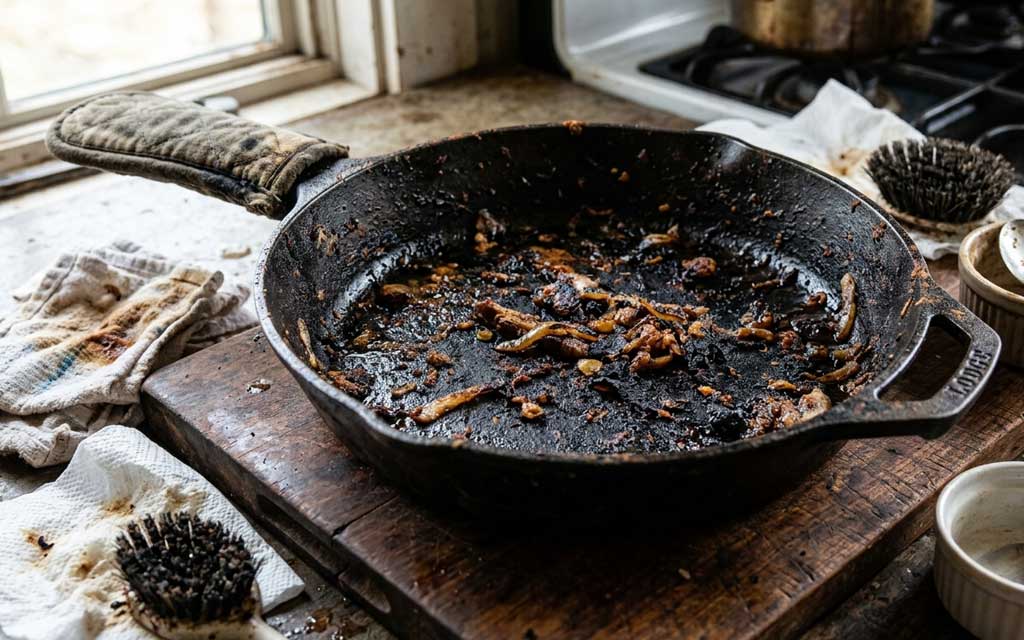
Stubborn carbon buildup can be managed by boiling a small amount of water in the skillet on the stovetop to loosen debris. After the water cools, a stiff brush or salt paste can remove the remaining particles. For particularly difficult spots, baking soda can assist in lifting debris without damaging the surface. Once cleaned, the pan should be dried over heat and lightly oiled to prevent oxidation.
Cleaning Frequency and Maintenance
Cleaning the skillet after each use prevents buildup and maintains the cooking surface. If the pan was used for dry, low-residue tasks, a thorough wipe with a clean paper towel may suffice. However, ensuring the iron is completely dry and free of moisture remains the priority. Regular maintenance ensures the cookware remains in peak condition for long-term use.
General Residential and Commercial Cleaning Standards
Maintaining a healthy living or working environment involves regular attention to all surfaces. Professional cleaning standards for residential and commercial spaces often include deep carpet care, upholstery sanitization, and specialized floor maintenance. Utilizing experienced cleaning services can help manage accumulated dust and grime, ensuring spaces remain safe and hygienic. Many professional services offer consultations to determine the most effective cleaning protocols for specific property needs.
Call Us
778.801.8595
SEND US AN EMAIL
book@mobicleaning.ca
Text Us
778.801.8595
Contact Us For Cleaning Services
Real Results
We take tremendous pride in the results we deliver for our clients. The photos speak for themselves.








Why Choose Us
Business License, Criminal Record Check, Trained Technicians, Professional Tools, Professional Solutions, Better Results and Quality, Transparent Pricing and no Hidden Fees, Health Benefits, Professional Operation of Tools, Mobi Cleaning Difference, Flexible Scheduling, On-Time, Maintenance, Great Competitive Value, Customer Satisfaction Focused, IICRC Trained, Green Cleaning, Reputation, Property Protection, Fast Drying Carpets, 100 Percent Satisfaction Guarantee, Experience, Professional Processes, First-Class Service, Fast Response Time, Free Consultation and Estimates, Competitive Pricing and Dedicated Account Manager