









27 Smart Strategies to Eliminate Home Dust and Prevent It From Returning | Mobi Cleaning Canada
Household dust gathers incredibly fast. You can meticulously wipe down a media console, glance away, and notice a thin, gritty film has already reclaimed the surface. It settles aggressively onto your upholstery, flooring, smart devices, linens, and every overlooked crevice in your home. This continuous accumulation triggers respiratory allergies, degrades your indoor air quality, and makes an otherwise spotless property look neglected and dim.
Fortunately, you do not have to endure this endless cycle every single day. By adopting proactive cleaning routines, utilizing professional-grade tools, and making a few strategic home upgrades, you can halt airborne particles before they land, keeping your living environment pristine for longer stretches of time.
In this ultimate residential cleaning guide, we break down the root causes of major dust accumulation, identify where these particles hide, and provide actionable techniques to restore your indoor air. We are also sharing commercial-grade secrets developed through our extensive experience providing premium house cleaning services across the Lower Mainland.
The Root Causes of a Dusty House
Airborne debris stems from an array of everyday sources. A notable portion is manufactured right inside your living areas, while another wave drifts in from the exterior, settling non-stop as you sleep, move about, prepare meals, or unwind on the couch.
The primary culprits behind household dust collection include:
- Shed skin cells and natural human dander
- Microscopic textile fragments cast off by blankets, drapery, and apparel
- Pet fur, hair, and dried animal dander
- Seasonal pollen spores and outdoor soot
- Forced-air heating systems and unmaintained HVAC ducts
- Gritty soils tracked inside via footwear
- Lingering particulate matter from recent home renovations or construction
- Crumbling carpet fibers, decaying underlays, and worn rug backings
- Unsealed gaps hidden around exterior windows and entry doors
Instant Actions for Immediate Relief
If you want to drastically lower the volume of floating debris in your rooms right now, put these straightforward practices into action today:
- Switch to an advanced vacuum cleaner outfitted with a certified HEPA exhaust filter
- Stop using old towels or feather dusters and upgrade to premium microfiber cloths
- Put all bedroom sheets, pillowcases, and blankets through the wash weekly
- Establish a rigid calendar reminder to swap out your HVAC furnace filters
- Take accent rugs and welcome mats outdoors to give them a vigorous beating
- Brush and groom your cats or dogs outside whenever the weather permits
- Keep your home’s windows completely latched during breezy days
- Run a dedicated portable air purifier featuring high-efficiency HEPA media
- Use a dehumidifier to keep indoor moisture levels regulated safely under 50%
Clean Smarter, Not Harder
- Execute a Top-to-Bottom Cleaning Sequence
Because loose particles inevitably drift downward due to gravity while you work, you must always begin at the highest points of a room and finish at floor level. This methodical trajectory prevents you from accidentally raining debris down on surfaces you just finished wiping, saving you from wasting time re-cleaning areas.
Always adhere to this exact sequence when dusting any room:
- Ceiling fan blades and motor housings
- Recessed lights, track lighting, and chandeliers
- Crown moldings, high ledges, and door trim
- Bookcases, floating wall shelves, and mantlepieces
- Tabletops, desks, dressers, and chair frames
- Floor baseboards
- Hardwood floors, tile, and wall-to-wall carpeting
- Rely Exclusively on Microfiber Cleaning Cloths
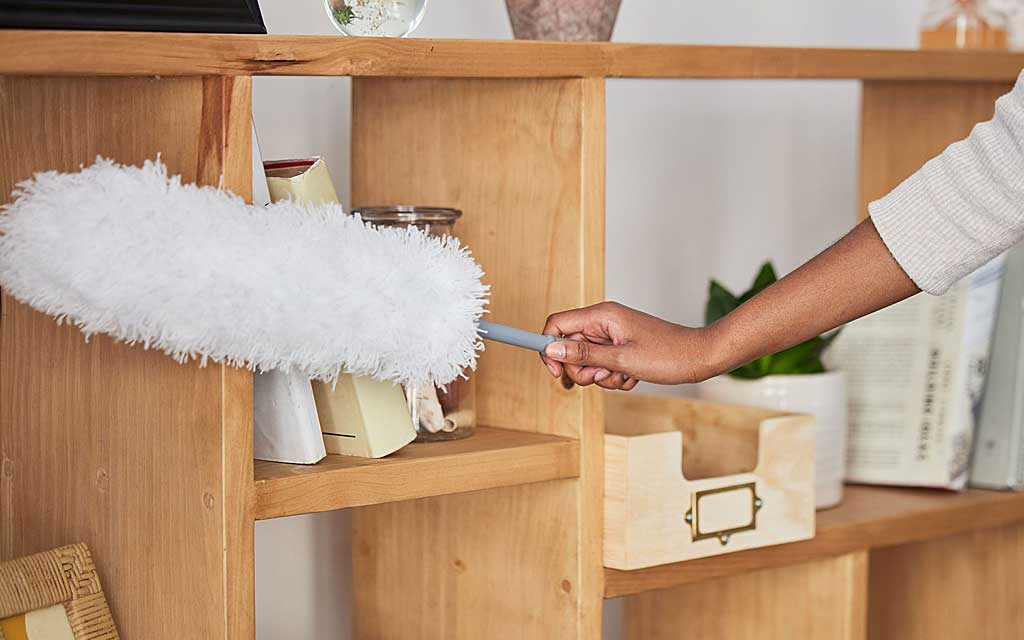
Microfiber textiles are engineered with split fibers that generate a static charge to grab and hold onto dust particles rather than spreading them around. Vintage feather dusters or discarded cotton shirts merely launch debris back into the room’s airflow to settle somewhere else a few minutes later. For standard maintenance, use a fresh, entirely dry microfiber cloth. When tackling sticky films or heavy buildup, mist your microfiber towel lightly with clean, lukewarm water.
Ensure you toss your microfiber cloths directly into the washing machine as soon as your routine is finished. Avoid adding liquid fabric softeners to the wash cycle under any circumstances, as it leaves a slick film that ruins the fabric’s ability to grab dust.
- Vacuum Using a Certified HEPA Filtration System
If your household vacuum cleaner does not feature an airtight, true HEPA filtration chamber, it is likely blasting fine, invisible particles right back out into your breathing zone. A certified HEPA system is absolutely vital for allergen removal because it locks away the microscopic triggers responsible for asthma flares and seasonal sneezing.
Make a point to vacuum these target areas regularly, sliding heavy furniture out of the way whenever possible to uncover hidden pockets of dirt:
- Wall-to-wall broadloom carpeting
- Area rugs, runners, and entry mats
- Carpeted staircases and risers
- Empty spaces directly underneath your beds
- Hard-to-reach zones beneath sofas and heavy lounge chairs
- Fabric-covered couches, ottomans, and armchairs
- Air intake vents and climate control grilles
- Hardwood, porcelain tile, and luxury vinyl plank flooring (vacuuming hard surfaces before mopping prevents scratching)
- Optimize Your Vacuuming Frequency
To stay ahead of dust accumulation completely, our professional cleaning team recommends following this baseline maintenance schedule:
- Busy family rooms and living areas: two to three times per week
- Main and guest bedrooms: one to two times every week
- Hard surface flooring areas: once per week
- Upholstered fabric furniture pieces: once a week
- Full carpets and rugs: at a bare minimum, once per week
If you live with heavy-shedding pets, you will need to scale up these cleaning intervals to maintain a clean environment.
Stop Dust at the Perimeter
- Deploy a Double-Mat Entry System
Create a strong defensive perimeter by placing a rugged, weather-resistant mat outside your doorway and an secondary absorbent mat directly inside the foyer. This dual-barrier setup strips abrasive outdoor soil, sand, and pollen from the soles of shoes before those particles can ever compromise your main living spaces. Take both mats outside once a week to shake them out thoroughly.
- Enforce a Strict No-Shoes Policy
Outdoor footwear easily imports environmental grit, industrial dust, landscape pollen, and street contaminants into your house. By maintaining a firm “shoes off at the door” rule for family members and houseguests alike, you block the vast majority of heavy particulates that otherwise get ground deep into your carpets and floorboards.
- Keep Windows Secured During High Winds
Airborne dirt can compromise your indoor spaces in mere minutes when outdoor gusts pick up. If your home sits near an unpaved road, an active Greater Vancouver construction development, or a high-traffic street, keeping your windows tightly locked during breezy conditions will dramatically cut down your cleaning workload.
- Insulate Structural Gaps Around Doors and Windows
Microscopic building gaps continuously draw outdoor dust into your home due to indoor and outdoor air pressure imbalances. To stop this invisible infiltration, you should regularly examine, caulk, or weatherstrip the following architectural details:
- Exterior and interior window trim casings
- Main front and back door jambs
- Sliding glass patio doors
- Small gaps running along floor baseboards
- Attic access panels and hatch entries
Sealing these pathways safeguards the freshness of the air your family breathes while simultaneously stopping drafts and lowering your monthly heating bills.
Minimize Allergens in the Bedroom
Bedrooms routinely collect a much higher volume of airborne debris than almost any other zone in a residential property. This happens because you spend roughly eight hours there every single night shedding skin cells and moving heavy fabric linens around. Additionally, microscopic dust mites love these warm, humid spaces, multiplying rapidly as they feed on those discarded organic flakes.
- Wash Bed Linens on a Weekly Schedule
Strip your mattress every week and launder all sheets, pillowcases, and fitted blankets in hot water. Reaching high water temperatures is absolutely necessary to eliminate dust mite colonies and totally wash away accumulated body oils and skin fragments.
- Periodically Launder Pillows and Heavy Duvets
Your sleeping pillows need a deep machine wash every three to six months, while thick down or synthetic duvets should be laundered at least twice a year. Encasing these items in fully zippered, hypoallergenic protective covers will significantly restrict their ability to collect debris over time.
- Retire Aging, Worn-Out Mattresses
As a mattress reaches the end of its lifespan, its internal comfort foams and fibers start to disintegrate and shed internally, venting fine dust with every movement. If you have been sleeping on the same mattress for over eight to ten years, it is likely storing a massive accumulation of dust mite debris and dead skin cells. Investing in a clean, modern mattress can instantly revolutionize your bedroom’s air quality.
- Deep Vacuum Your Mattress Regularly
Once a month, click the specialized upholstery brush tool onto your vacuum hose and meticulously clean the entire top and sides of your mattress. This practice draws out deeply trapped hair, organic skin flakes, and stray textile fibers before they can break down further.
- Install Hypoallergenic Protective Encasements
Purchase premium, fully zippered allergen-proof barriers designed explicitly for your sleeping pillows and mattresses. These protective layers completely isolate your bedding to block dust mite infestations while preventing disintegrating inner fillings from escaping out into your bedroom air.
Control Debris on Textiles and Soft Furnishings
Floating particles adhere effortlessly to porous, woven textiles. Interior elements like upholstered sofas, thick window drapery, decorative accent rugs, plush throw blankets, children’s stuffed toys, and accent pillows are perpetually shedding structural threads while acting as magnets for airborne soot.
- Vacuum Home Upholstery on a Weekly Basis
Develop a routine of vacuuming your fabric furniture every seven days utilizing your machine’s specialized brush wand. Dedicate extra effort to clearing out tight fabric seams, structural creases, and the dark voids beneath removable cushions, which serve as major accumulation zones for hidden grit.
- Launder or Beat Decorative Throw Pillows
Regularly run your decorative pillow shams through a warm laundry cycle. For delicate fabrics or non-washable fills, take the accent cushions outdoors to give them a firm pounding, forcing out trapped microscopic debris.
- Wash Window Drapery and Curtains
Put your hanging window panels through a thorough cleaning cycle every few months. If your window coverings feature sensitive fabrics that cannot withstand a traditional washing machine, utilize your vacuum cleaner’s extended suction attachment to refresh the fabric panels from the top hem down to the floor.
- Clean Accent Rugs Outside the Home
Carry smaller floor rugs and hallway runners outside on a weekly schedule. Give them a powerful shake and whack them with a sturdy broom handle if necessary to dislodge the deep, packed silt that standard residential vacuum cleaners routinely fail to extract.
- Schedule Professional Upholstery Cleaning Services
To achieve a genuinely sanitized living space, schedule a deep clean with the team at Mobi Cleaning Canada. We utilize commercial-grade, hot-water extraction machinery that penetrates deep into furniture padding to draw out impacted soil, body sweat, pet dander, and deep-seated environmental allergens. For households with young children or indoor pets, we strongly advise arranging a professional upholstery detailing once a year to preserve your furniture investments.
Optimize and Purify Indoor Air Quality
- Upgrade HVAC Furnace Filters According to Schedule
A choked, dirt-laden air filter severely chokes system airflow and ultimately recirculates loose debris back through your heating and cooling registers. Make sure you replace your residential HVAC filters every 30 to 90 days. A reliable trick is to hold the extracted filter up against a bright light; if the illumination cannot penetrate the fabric grid, the mesh is completely clogged and requires immediate replacement.
- Target the Correct MERV Efficiency Rating
When purchasing replacement furnace filters, evaluate the Minimum Efficiency Reporting Value (MERV) metrics carefully:
- MERV 8–10: Engineered to manage basic household fibers and large dust particles.
- MERV 11–13: Delivers premium air filtration, making it the ideal selection for asthma and allergy sufferers.
- MERV 14+: Commercial-strength air purification, though you must verify your residential furnace fan can handle the increased airflow resistance.
Our technicians always recommend selecting premium pleated material styles over flimsy, inexpensive fiberglass variants, as pleated patterns capture far more floating particulates.
- Sanitize Air Supply and Return Vent Grilles
Vacuum right across your metal vent faces weekly to prevent grey furring from forming on the slats, then wipe down the grates using a damp microfiber rag. If you spot a significant crust of dust forming inside, unfasten the securing screws entirely and submerge the vent covers in hot, soapy water.
- Book Professional Residential Air Duct Cleaning
When your home’s hidden HVAC ductwork collects thick layers of dust, loose pet hair, and construction debris, your central heating and cooling system re-circulates those exact pollutants through your rooms every time the blower activates. If you notice dark smudge rings forming around your ceiling vents or experience a stale, musty odor whenever the furnace starts up, it is time for a thorough duct cleaning.
The certified cleaning technicians at Mobi Cleaning Canada utilize specialized, truck-mounted negative-pressure vacuum units and mechanical agitation whips to fully purge all accumulated debris from deep inside the trunk lines that consumer-grade vacuums simply cannot reach.
- Deploy Portable HEPA Air Purifiers
Position an air purification unit equipped with a certified true HEPA filter in your high-occupancy zones, such as the primary bedroom or main living area. Running these filtration units continuously helps capture floating airborne dander before it ever has an opportunity to drop down onto your clean furniture.
- Regulate Indoor Moisture Levels
Microscopic dust mites depend heavily on environmental moisture to survive, which is why maintaining your indoor relative humidity below the 50 percent threshold is highly effective for pest control. You can seamlessly manage residential humidity levels by:
- Operating your central air conditioning system during sweltering, muggy summer months
- Setting up dedicated standalone dehumidifier units in chronically damp zones like basements
- Keeping your overhead exhaust fans running whenever you are boiling food or showering
- Instantly addressing plumbing drips, dripping fixtures, or roof leaks
- Avoiding the practice of hanging wet laundry to air-dry inside your primary living spaces
Minimize Pet Dander, Hair, and Tracking
While our domestic animals are beloved family members, they drastically increase the volume of household debris by dropping coarse fur, shedding skin flakes, and importing outdoor soil from the yard.
- Brush and Groom Your Pets Outdoors
Whenever the Lower Mainland weather is clear, take your animal’s deshedding brush and handle their grooming out in the yard. This effortless preventative habit stops thousands of airborne hairs and fine skin flakes from ever dropping onto your living room carpets and upholstered furniture.
- Wash Animal Beds and Blankets Weekly
Fabric pet beds function exactly like massive sponges for loose fur, exterior environmental allergens, and natural body oils. To keep these rest areas sanitary and free of debris, launder all animal mats, liners, and blankets in a hot water washing cycle once every seven days.
- Vacuum Daily in High-Shedding Households
If your dogs or cats shed continuously, running a swift daily pass with your vacuum cleaner across central walkways prevents loose fur and dander from migrating into every corner of the house. Direct your rapid daily cleaning efforts toward the exact spots your animals occupy most, including around their food bowls, right next to their sleeping mats, and directly beside the living room sofa.
Room-by-Room Dust Mitigation Tactics
The Living Room
- Ensure you vacuum completely beneath deep sofas and heavy accent chairs on a regular basis.
- Utilize a completely dry microfiber cloth to discharge the static dust binding to flat-screen TVs and media electronics.
- Launder all textile throw blankets and fleece wraps on a strict weekly schedule.
- Wipe down your baseboards using a damp cloth every single week to prevent buildup.
- Take small accent rugs and entryway runners outside for a quick, vigorous shake.
The Kitchen
- Scrub down the hidden upper surfaces of your top cabinets, where airborne dust binds with sticky cooking grease.
- Degrease the mesh metal filters nestled inside your range’s stove vent hood on a regular basis.
- Sweep or vacuum your kitchen flooring daily to capture food crumbs before they break down.
- Execute a comprehensive deep vacuuming of hard floors once a week right before you mop.
- Wash kitchen window curtains frequently or wipe down horizontal blinds with a damp cloth.
The Bathroom
- Keep your bathroom ventilation fan running during and after hot showers to rapidly lower moisture levels.
- Launder your fabric bath mats and contour rugs in a hot washing machine cycle every single week.
- Vacuum out your exhaust fan’s slotted grille to keep the internal airflow moving at maximum efficiency.
Maximize Indoor Air Quality (HVAC Maintenance)
- Cycle Out HVAC Furnace Filters According to a Strict Schedule
A blocked, dirty filter pushes fine debris throughout your entire residential property, which is why swapping out your filters every 30 to 90 days is absolutely critical. Test the condition of your filter by pulling it out and holding it up toward a bright light source. If the light cannot pass through the fabric mesh, it is completely loaded with debris and demands immediate replacement.
- Evaluate and Select the Proper MERV Filtration Metric
- MERV 8–10: Engineered explicitly for basic particulate capture and everyday dust management.
- MERV 11–13: Offers enhanced, high-efficiency filtration performance, making it an excellent selection for allergy sufferers.
- MERV 14+: Industrial-grade air filtration that may require specific system compatibility checks due to increased airflow resistance.
Pleated fabric designs significantly outperform cheap, basic fiberglass options, which is why our technicians always recommend premium pleated models for superior indoor air quality.
- Sanitize Air Supply Registers and Return Vents
Vacuum over your metal vent grilles every week and wipe them clean using a damp microfiber rag. If they appear heavily coated in thick debris, unscrew the securing fasteners entirely and wash the grates thoroughly in warm, soapy water.
- Book Professional Residential Air Duct Cleaning
When hidden home ductwork accumulates thick layers of dust, loose pet hair, and construction particles, your central heating and cooling system re-circulates those exact contaminants through your rooms every single time the HVAC blower turns on. If you notice dark smudge rings forming around your ceiling vents or experience a musty smell in the air, your home is due for a comprehensive duct cleaning.
As professional technicians, the experienced team at Mobi Cleaning Canada completely clears away all dust, debris, and airborne contaminants from your system. We utilize specialized, high-powered, truck-mounted vacuum equipment that reaches deep into trunk lines homeowners cannot access with consumer tools.
- Run Portable HEPA Air Purifiers
Invest in an indoor air purification system equipped with a certified true HEPA filter and position it directly in your primary bedroom or main living area. Run the unit daily to actively capture floating dust particles right out of the air before they ever get the chance to settle onto your hard surfaces.
- Control Ambient Moisture Patterns
Keep the relative humidity inside your home safely below the 50 percent threshold, as microscopic dust mites require high humidity to survive and multiply. Implement these helpful tips to manage residential moisture:
- Run your central air conditioning system during muggy, humid summer months
- Utilize dedicated basement dehumidifiers in naturally damp lower levels
- Properly ventilate your kitchens and bathrooms by running built-in exhaust fans
- Repair any plumbing drips or structural roofing leaks immediately upon discovery
- Avoid hanging wet laundry to air-dry inside your main living spaces
Target Pet Dander and Fine Fur
Domestic pets continuously contribute to household dust accumulation as they shed loose fur, drop natural dander, and track exterior garden dirt indoors.
- Complete Animal Grooming Outdoors
Brush and groom your pets outside the home whenever the weather permits to prevent loose hair and fine dander from ever settling inside your clean rooms.
- Put Pet Bedding Through the Wash Weekly
Pet beds act exactly like giant sponges for stray fur, body oils, and outdoor allergens, making it highly beneficial to launder all pet blankets and cushions in hot water once a week.
- Implement Daily Vacuuming in High-Shedding Households
Running a quick pass over your primary walkways every single day prevents loose fur and dander from drifting across your entire home. Focus your daily cleaning on the areas your animals frequent most, such as around their beds, near the living room couches, and surrounding their feeding stations.
Targeted Room-by-Room Dust Control
The Living Room
- Vacuum intensely underneath all deep sofas, sectional pieces, and heavy lounge chairs.
- Meticulously clear static films from your media electronics and television consoles on a regular basis.
- Ensure all decorative textile wraps and throw blankets are washed regularly in a fresh laundry cycle.
- Clean down your floor baseboards utilizing a dry or lightly misted microfiber rag once every seven days.
- Carry smaller accent rugs and area runners out to the yard for a powerful, manual shake.
The Kitchen
- Scrub down the concealed upper surfaces of your ceiling-height cabinets where cooking oils bind with falling dust.
- Strip out and degrease the mesh metal filters hidden inside your range’s overhead ventilation hood.
- Sweep up or vacuum your main kitchen floor pathways daily to intercept loose food particles before they break down.
- Execute an extensive deep vacuuming of hard floor surfaces once a week right before you start mopping.
- Launder your fabric kitchen drapery frequently or wipe down individual horizontal blind slats.
The Bathroom
- Ensure you engage your overhead exhaust ventilation systems during and after hot showers to rapidly clear out steam.
- Put all fabric bath mats and contour rugs through a hot machine wash every single week.
- Extract built-up lint and grey furring from your bathroom fan’s slotted exhaust grilles.
- Wipe down the surfaces of all storage cabinets and medicine shelves on a weekly schedule.
The Entryway
- Deploy a dual-barrier floor protection strategy by positioning a heavy mat outside and an absorbent mat inside the threshold.
- Keep your household footwear stored neatly away inside an enclosed shoe cabinet or storage bench.
- Sweep or vacuum the entire mudroom or foyer floor surface on a daily basis.
- Sanitize all drop-zone shelving and console tables where loose keys, wallets, and bags are regularly placed.
The Basement
- Keep a dedicated, standalone dehumidifier running continuously to strictly manage sub-grade moisture patterns.
- Mend and insulate any structural fissures or small gaps found in your concrete foundation walls and floorboards.
- Clean raw or finished concrete flooring thoroughly using a certified high-efficiency HEPA vacuum cleaner.
- Contain your seasonal wardrobes and belongings inside tightly sealed plastic totes instead of porous cardboard boxes.
Mitigate Dust Overlap During Home Renovations
Property remodeling and structural additions launch immense volumes of fine drywall and masonry particulates into every room of a house, which then settle deeply into your carpets, area rugs, and upholstered furniture. Safeguard your living zones by practicing these protective site habits:
- Erect an airtight barrier around active renovation zones utilizing thick plastic construction sheeting.
- Run high-efficiency portable air purifiers directly adjacent to the active remodeling space.
- Keep surrounding interior doors completely closed to prevent the spread of airborne grit.
- Tape over and conceal nearby HVAC forced-air supply registers and air returns.
- Vacuum the immediate construction zone meticulously at the conclusion of every single workday.
- Completely clear out and wipe down your central ventilation grilles once the remodeling project finishes.
Strategic Modifications to Building Materials
Transition to Hard Surface Flooring
Wall-to-wall carpeting functions as a natural filter that constantly catches and stores airborne dust. If you endure severe respiratory allergies or struggle against a non-stop wave of household particles, replacing your broadloom with hardwood, tile, or luxury laminate will cause a massive improvement.
Replace Aging, Deteriorating Carpets
As carpets reach the end of their lifespan, their internal backing materials break down and shed structural fibers continuously, while simultaneously storing years of embedded grit deep in the backing. While professional hot-water extraction offers spectacular temporary relief, complete flooring replacement eventually emerges as your superior long-term solution.
Establish Sustainable Dusting Rotines
While floating particles can never be permanently banished from a home, implementing a smart, structured maintenance schedule will dramatically slow down how quickly layers accumulate.
Proactive Daily Tasks
- Run a quick vacuum pass across high-traffic hallways and central family walkways.
- Wipe away obvious, visible dust films that have settled on your primary furniture surfaces.
- Take your primary front and back entry mats outside for a quick manual clearing.
- Sweep or vacuum your hard floor surfaces to prevent gritty tracking.
Comprehensive Weekly Habits
- Strip and replace all master and guest bedroom sheets, pillowcases, and duvet covers.
- Vacuum all wall-to-wall carpets, accent runners, and upholstered fabric couches.
- Clean down and clear off the exterior faces of your home’s air vent covers.
- Execute a thorough dusting of your entire room layouts, moving strictly from top to bottom.
- Carry smaller accent rugs out to the balcony or yard to shake out loose debris.
Focused Monthly Maintenance
- Meticulously vacuum the entire top, bottom, and side panels of your sleeping mattresses.
- Dismantle and wash or vacuum your hanging window curtains and draperies.
- Wipe clean your overhead ceiling fan blades and decorative light fixture globes.
- Put all accent throw blankets and decorative pillow shams through a thorough wash cycle.
- Clean off the face of your baseboards using an advanced microfiber cloth.
- Slide in fresh furnace and HVAC filters if the existing media is fully loaded with particles.
Deep Seasonal Strategies
- Evaluate and swap out degraded weatherstripping around your exterior doors and window casings.
- Slide out and vacuum behind heavy kitchen appliances, including refrigerators, ranges, and ovens.
- Move heavy living room and bedroom furniture completely out of the way to vacuum hidden floor space.
- Arrange a professional deep cleaning treatment for your residential carpets and furniture fabrics.
- Book a comprehensive air duct sanitation service to clear out your underlying HVAC system trunk lines.
When to Call the Professionals at Mobi Cleaning Canada
Certain persistent dust complications point directly to deep environmental failures within a property that demand professional-grade remediation:
- Thick, grey accumulation forming rapidly across your metal air vent registers.
- A lingering, stale, or distinctly musty aroma present whenever your furnace activates.
- Heavy dust coatings materializing immediately on furniture despite rigid daily cleaning routines.
- Fine debris settling back down onto your hard surfaces within mere hours of wiping them.
- Intense, stubborn particulate matter lingering throughout the house following a recent home renovation project.
- Severe or worsening seasonal allergy attacks, coughing, or sneezing while relaxing indoors.
- Elevated volumes of pet hair, animal fur, and dander shedding concerns that overwhelm consumer vacuums.
- Ancient, neglected carpet fibers or fabric sofa upholstery holding years of impacted grime and skin cells.
- Character properties or older homes contending with exceptionally dusty attic spaces or damp basements.
As your local expert cleaning technicians, the dedicated team at Mobi Cleaning Canada is fully prepared to assist you with:
- Professional residential and commercial air duct cleaning
- Complete HVAC unit and furnace system sanitizing
- Deep hot-water carpet steam cleaning and restoration
- Commercial-grade upholstery and fabric sofa cleaning
- Clothes dryer vent and exhaust lint extraction
- Specialized tile, stone, and grout detailing
- Intensive post-construction deep cleaning services
Our technicians deploy high-velocity, truck-mounted extraction systems, heavy-duty mechanical agitation brushes, and years of authentic field experience to completely pull out the deep-seated dust you simply cannot reach with standard household cleaning tools alone.
Summary
Dust will always remain an ongoing element of managing a residential property, but you possess absolute control over how much of it is permitted to take over your home.
By adopting the proper tools, establishing highly efficient maintenance habits, and adhering to a predictable cleaning timeline, you can keep your living spaces fresher, brighter, and significantly easier to manage. If you are currently feeling overwhelmed by heavy dust buildup or simply wish to hit the reset button with a comprehensive deep cleaning, our crew is here to return your environment to a healthier, immaculate state.
Our trusted team combines extensive local industry experience, cutting-edge commercial machinery, and an authentic commitment to delivering purified indoor air and spotless properties across the Lower Mainland.
Connect with the master cleaning technicians at Mobi Cleaning Canada today to secure immediate, premium quality service for your home.
Call Us
778.801.8595
SEND US AN EMAIL
book@mobicleaning.ca
Text Us
778.801.8595
Contact Us For Cleaning Services
Real Results
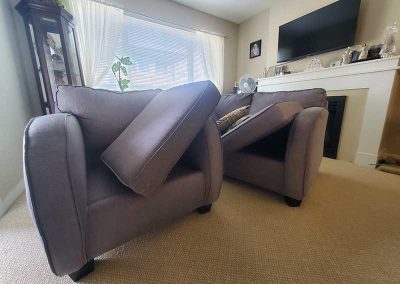
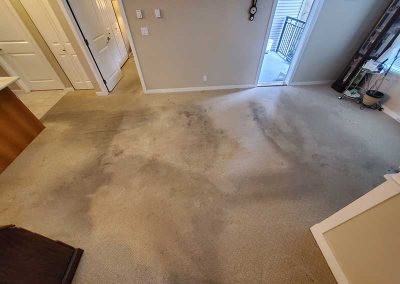
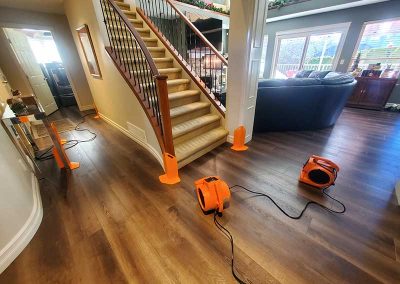
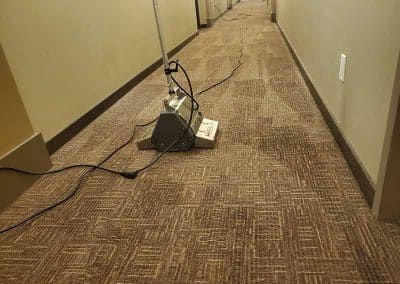
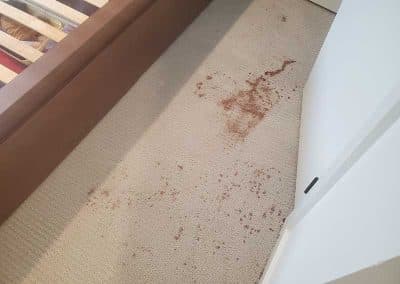
We take tremendous pride in the results we deliver for our clients. The photos speak for themselves.

Why Choose Us
Business License, Criminal Record Check, Trained Technicians, Professional Tools, Professional Solutions, Better Results and Quality, Transparent Pricing and no Hidden Fees, Health Benefits, Professional Operation of Tools, Mobi Cleaning Difference, Flexible Scheduling, On-Time, Maintenance, Great Competitive Value, Customer Satisfaction Focused, IICRC Trained, Green Cleaning, Reputation, Property Protection, Fast Drying Carpets, 100 Percent Satisfaction Guarantee, Experience, Professional Processes, First-Class Service, Fast Response Time, Free Consultation and Estimates, Competitive Pricing and Dedicated Account Manager