











Complete Strategies for Preventing and Remedying Household Water Infiltration
Did you know that dangerous fungal spores can begin multiplying in as little as 24 to 48 hours? Mold colonies expand with incredible speed, which means you need to contact the emergency response team at Mobi Cleaning Services to arrive even faster.
Even a seemingly minor plumbing drip or a small pocket of hidden moisture can trigger devastating structural decay. According to official FEMA statistics, a mere single inch of interior floodwater can burden a homeowner with up to $25,000 in structural repair bills. Furthermore, residential water disasters occur far more frequently than the average property owner assumes. In reality, approximately 14,000 individuals across the country experience a sudden water emergency every single day, cementing this issue as a premier property maintenance nightmare. If you detect visual evidence of basement flooding or moisture tracking inside your house or commercial building, executing immediate counter-measures is absolutely vital.
Securing early intervention from local water damage restoration experts is the ultimate key to preserving your building’s structural integrity and stopping secondary complications from taking hold. Secondary issues—such as rapid mold colonization—destroy your building materials while triggering serious health liabilities, including sudden skin rashes, chronic eye irritation, severe sinus infections, and long-term respiratory distress. Contracting the team at Mobi Cleaning Services to perform immediate emergency water extraction dramatically mitigates long-term structural liabilities and halts fungal germination before it can establish a foothold, saving you valuable time and money. Because traditional building components—such as wood framing packages, fiberglass insulation, and interior drywall sheets—are incredibly porous, moisture absorbs deep into their cores within minutes. Without the application of professional structural drying protocols and commercial-grade dehumidification machinery, these saturated materials will rapidly rot and physically compromise your entire building envelope.
If you stall or delay taking defensive action, these trapped moisture pockets create the absolute perfect habitat for toxic black mold to flourish. Over time, these heavily contaminated structural sections must be completely gutted and hauled away via expensive, labor-intensive mold remediation and building reconstruction projects. The faster you place a call for professional intervention, the sooner our experienced field crew can neutralize the threat and stop further property destruction. Throughout this comprehensive article, we are sharing professional water damage prevention tips and highly actionable techniques you can implement right away to minimize asset loss. We will break down emergency initial protocols, advanced structural drying workflows, and the definitive warning signs that indicate it is time to call a certified water damage restoration company like Mobi Cleaning Services.
Decoding Water Damage Mitigation
When property owners jump online to search for “how to mitigate water damage,” they are looking for immediate, tactical ways to stop an active flood from compounding. Water mitigation focuses strictly on rapid disaster cleanup, which aggressively halts the spread of migrating water, suppresses mold germination risks, and preserves your estate’s underlying structural framework.
It is absolutely vital to recognize how initial mitigation workflows differ from complete property reconstruction:
- Water Mitigation targets the immediate source of the failure and focuses on containing active property destruction.
- Water Restoration shifts the focus toward repairing, rebuilding, and restoring the damaged real estate back to its pristine, pre-flood state.
In the vast majority of emergency calls, professional mitigation entails stopping the primary leak, pumping out standing pools, thoroughly drying out the building core, and treating the space to prevent bacterial cross-contamination.
Rapid Tactics to Contain Active Water Damage
If you find yourself facing a sudden plumbing crisis, direct your focus toward these critical, time-sensitive actions:
- Securely tighten your property’s primary water shut-off valve immediately to cut the flow.
- Disconnect the electrical grid at your main breaker panel for any flooded rooms.
- Extract standing water pools utilizing a heavy-duty wet-dry vacuum or a submersible sump pump if it is entirely safe to do so.
- Relocate exposed furniture, smart devices, and high-value personal effects to a completely dry area of the house.
- Focus on thoroughly drying out the damp space within a strict 24 to 48-hour operational window.
- Rip out completely unsalvageable materials, such as squishy carpets or sagging drywall panels, if the situation demands it.
- Contact Mobi Cleaning Services without a moment’s hesitation if you are confronting a large-scale or multi-room flood.
Demystifying Water Infiltration: Root Causes and Environmental Classes
Indoor property flooding can materialize from several distinct mechanical and environmental failures. Some of the most frequent catalysts include frozen pipes bursting inside walls, severe coastal rainstorms, weathered roof failures, and sudden appliance hose ruptures on washing machines or dishwashers. When preparing your documentation for an insurance claim adjustor, it is critical to properly classify the three distinct categories of water damage: clean, gray, and black water. Accurately identifying these specific classes ensures that you manage the remediation process safely, rapidly, and in perfect alignment with safety standards.
Clean Water (Category 1)
Originating from a completely sanitary supply line—such as an overlooked leaking faucet, incoming rainwater, fresh melting snow, or an overflowing clean toilet holding tank—clean water represents the least dangerous classification. However, this category of water can still completely warp hardwood floors and ignite major mold growth if it is ignored for a couple of days. Fortunately, this represents the easiest category to remediate and typically only requires swift mechanical extraction paired with professional industrial air movers.
Gray Water (Category 2)
Gray water consists of chemically or organically polluted wastewater discharged from heavy appliances like washing machines, commercial dishwashers, backed-up sink drains, or toilet bowl overflows that contain urine but no feces. While it is inherently less volatile than raw sewage, gray water still triggers significant property degradation, breeds hazardous bacteria, and fuels rapid, aggressive mold growth. Unlike category 1 water which simply requires drying, gray water mitigation demands comprehensive decontamination, deep chemical sanitization, complete extraction, and high-velocity structural drying.
Black Water (Category 3)
Standing as the most volatile, toxic, and dangerous form of indoor flooding, black water is highly unsanitary and introduces immediate biohazard containment risks. This hazardous liquid contains raw municipal sewage, solid human waste, dangerous bacterial cultures, flesh-eating viral pathogens, and toxic industrial chemical runoff. Beyond physically destroying your building materials, black water exposure causes severe, life-threatening illnesses like E. coli infections, salmonella poisoning, and hepatitis A, demanding an immediate evacuation of the premises. Because of these extreme biological health hazards, category 3 flooding must be addressed immediately by a certified biohazard cleanup professional.
Critical First Steps to Complete Once Water Infiltration Occurs
When you are suddenly confronted with an indoor flash flood, orchestrating the initial chaos can feel incredibly overwhelming and stressful. If you have already made the decision to call the emergency restoration specialists at Mobi Cleaning Services, you can execute a handful of rapid preventative steps before our service truck pulls into your driveway to ensure the subsequent cleanup process goes smoothly.
What to Execute in the First 24 to 48 Hours of a Structural Flood Emergency
Every minute counts when you are dealing with sudden indoor flooding. Dividing your emergency response into distinct, strategic time windows allows you to act with precision and block long-term property destruction.
Timeframe 0 to 2 Hours: Emergency Flash Flood Control
- Crank the main property water handle clockwise until the incoming supply is entirely shut off.
- Click off the electrical breakers feeding the damp rooms to guarantee total on-site safety.
- Avoid stepping foot inside structurally unstable zones or heavily flooded basements.
- Contain the migration of the water using thick absorbent towels, blankets, or makeshift spill barriers.
Timeframe 2 to 12 Hours: Heavy Extraction and Asset Protection
- Pump out standing water reservoirs utilizing a commercial-grade wet-dry vacuum or a heavy-duty submersible utility pump.
- Carry high-value furniture pieces, expensive area rugs, and irreplaceable family electronics into a completely dry room.
- Slide thick squares of aluminum foil or wooden blocks directly underneath heavy furniture legs to stop dark wood stains from bleeding permanently into underlying fibers.
- Pin up hanging drapes, window curtains, and bedding high off the wet flooring surfaces.
Timeframe 24 to 48 Hours: Intensive Structural Drying and Moisture Control
- Strategic placement of commercial-grade air movers, high-velocity floor fans, and industrial-strength low-grain refrigerant dehumidifiers.
- Throw open all your exterior windows and entry doors, but only if the outdoor humidity metrics are lower than the indoor environment.
- Continuously audit hidden moisture levels trapped inside your framing walls and flooring materials using specialized infrared sensors and moisture meters.
- Strip away and discard heavily saturated building materials, such as insulation or subfloors, if they are deemed completely unsalvageable.
5 Critical Steps for Safe Disaster Cleanup
- Prioritize the personal safety of you and your family members above everything else.
Stray electrical currents pass effortlessly through pooling surface water, creating extreme risks of fatal electrocution. If your basement level or main living areas are actively flooding, never step foot into the damp zone until your property’s electrical connection has been completely disconnected. To guarantee you avoid a severe electric shock, trace a path to your primary circuit breaker panel or fuse assembly to cut the electrical current before addressing the space. Furthermore, if you observe severe structural cracking or bowing drywall panels along the perimeter, stay away from the building entirely to avoid a sudden, catastrophic structural collapse.
- Locate and shut off the water leak source as quickly as humanly possible.
While natural external disasters—such as intense downpours or rapid seasonal snowmelt—remain impossible to manage, indoor plumbing failures are completely within your control. Water spraying aggressively from a ruptured appliance line, a backed-up toilet bowl, or a split vanity supply hose can be isolated locally at the individual fixture or stopped at the primary incoming gate valve. Always keep in mind that if you are confronting a toxic category 3 black water sewer backup, or if you are at all uncertain about the water source, avoid any physical exposure to the contaminated fluid.
- Thoroughly document the property damage for your home insurance claim.
To maximize the ultimate valuation of your insurance financial payout, you must meticulously catalog every single detail of your structural and property loss. Capture crisp, high-resolution photographs and wide-angle video footage of all affected rooms, making sure to preserve the exact footprint of the flood footprint. The moment your digital evidence has been safely recorded and backed up, call your property insurance provider immediately to initiate the formal claims process.
- Relocate personal items to prevent further ruin.
Provided the environment is entirely safe to navigate, carry your sensitive personal items, family electronics, and vital legal documents completely away from the expanding wet zone. Once again, if you suspect that the structural framework of your house has been physically compromised, remain safely outside.
- Extract standing surface water with an emergency wet vacuum or heavy towels.
If the underlying plumbing leak was minor and you feel confident managing the initial cleanup phase yourself, utilize dry towels to soak up residual surface moisture. Alternatively, connect a heavy-duty shop vac or an industrial wet-dry vacuum unit to suck up the pooled surface water before it migrates further.
Stop the Spread: Smart Actions That Limit Property Loss
Moisture migration develops in a matter of minutes, but acting quickly with these defensive steps halts the capillary spread of dampness:
- Slip small squares of waterproof aluminum foil or solid wood blocks directly underneath heavy furniture legs to prevent staining.
- Separate saturated area rugs, throw pillows, and soft sofa cushions from one another to maximize airflow.
- Prop up hanging draperies and low-slung fabrics completely away from damp subfloors or wet carpets.
- Carefully pry off wet baseboard trims to encourage targeted air circulation behind your finished drywall panels.
- Immediately haul out and discard deeply soaked items that lock stagnant moisture inside the room.
Conducting a Professional Water Damage Assessment
The exact moment moisture breaches your property boundaries, executing a comprehensive moisture diagnostic assessment is absolutely vital. Hidden structural damage manifests rapidly behind finished walls, beneath flooring layers, and across structural ceiling joists. Below, we look at the primary warning signs to analyze when evaluating the true scope and severity of your indoor flood.
Visible Foundation Cracks
Trapped water pools can find their way into existing masonry joints, causing small foundation cracks to expand aggressively after a heavy indoor flood. While minor concrete settlement fractures are completely normal as a residential property matures over time, wide structural cracks signal an immediate need for professional foundation repair.
Toxic Mold Growth
Spotted mold clusters appearing after water damage represent a frequent home maintenance crisis because damp, dark spaces are the ultimate breeding grounds for airborne spores. If you discover visible mold patches establishing a foothold on your drywall, subfloors, or framing timbers, that biological contamination must be completely eliminated. If it is not totally eradicated from the source, invisible fungal spores will multiply rapidly and spread throughout your entire property via your HVAC ventilation ducts. While managing minor surface spots is possible on your own, the EPA explicitly advises booking professional mold remediation services if the active contamination extends across an area greater than 10 square feet.
Musty Foul Odors
A pungent, earth-like, damp scent serves as a primary warning sign of hidden moisture pockets locked inside your building envelope. If you notice a persistent musty smell inside a room, it typically points to unaddressed mold or active mildew colonies growing underneath your floorboards. If you cannot easily pinpoint the exact origin of the stench, the moisture is likely buried deep inside structural wall voids and requires professional thermal imaging detection.
Where Water Hides After an Indoor Plumbing Leak
Not all structural property destruction is instantly recognizable to the naked eye. Excess water easily migrates into concealed interior cavities that are hidden from view, including:
- Deep behind finished, painted drywall assemblies
- Beneath natural hardwood planks, laminate floor tiles, and plywood subfloors
- Inside porous fiberglass batts or blown-in cellulose wall insulation
- Underneath built-in kitchen cabinets, bathroom vanities, and permanent shelving units
If these hidden structural spaces are not dried out completely using specialized equipment, they will trigger severe wood rot and nurture hidden toxic mold colonies.
How to Dry Out a Saturated Home: Tips, Tricks, and Tools
Mastering how to dry out water damage properly stands as the single most critical step toward preventing permanent structural decay over the lifespan of your home. Incorrect or incomplete structural drying leaves behind hidden reservoirs of moisture that lead to severe wood rot and incredibly expensive home repairs down the line. In fact, major environmental health agencies warn that traditional building materials left wet for over 48 hours must be cut out, removed, and discarded. By utilizing professional-grade restoration tools—such as commercial-grade LGR dehumidifiers, axial air movers, and digital pinless moisture meters—you guarantee a thoroughly dry property. Below, we outline the exact step-by-step restoration workflow for drying out moisture on different building surfaces.
Hardwood Flooring Systems
The moment natural solid wood becomes saturated with water, it runs an immediate, high-stakes risk of permanent warping, cupping, and structural buckling. When implementing hardwood floor water damage restoration protocols, follow these key procedural steps:
- Lift up all damp area rugs, clear out heavy furniture pieces, and remove all personal belongings resting on the wood planks.
- Use a high-suction commercial extraction machine or a powerful wet-dry vacuum to pull as much water as possible out of the wood joints.
- Because natural hardwood is highly porous, it easily traps toxic mold spores deep inside the organic wood grain. For this reason, sanitize your floors immediately after water extraction to thoroughly wash away deep-seated dirt and bacteria.
- Thoroughly dry out the wood layers using commercial axial air movers, floor drying mat systems, and industrial low-grain refrigerant dehumidifiers.
- Use a digital pinless moisture meter to constantly audit and track the drying metrics of the wood planks until they return to baseline values.
Saturated Carpeting and Fibrous Underpadding
Following a catastrophic plumbing break or a major pipe rupture, the tight space sandwiched directly between your carpet padding and the subfloor layers stays wet indefinitely unless it is dried using professional-grade systems. Because of this trapped moisture reservoir, wet area rugs and broadloom carpets serve as a highly volatile breeding ground for dangerous black mold and mildew colonies.
Here is how to ensure your carpets dry completely:
- Strip the entire room clean of all furniture pieces, decor accents, and personal electronics.
- Run a commercial-grade hot-water extractor or a high-velocity wet-vac to pull deeply embedded moisture out of the dense carpet pile.
- Position industrial axial air movers underneath the detached carpet backing to float the carpet off the floor, combined with low-grain dehumidifiers.
- Test the integrity of the subfloor resting underneath the foam padding using a digital moisture probe to verify that the area is 100% dry.
- Steam clean the entire carpet layout and mist on professional antimicrobial treatments to eliminate water stains and completely block subsequent mold growth.
Wet Drywall and Interior Wall Cavities
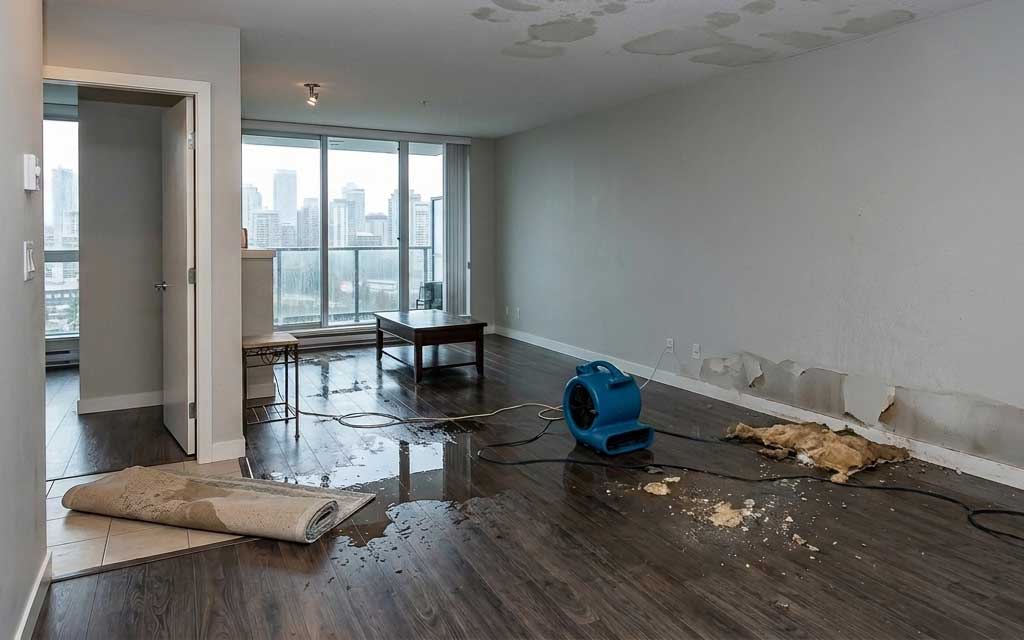
Finished drywall stands as the most common building material utilized in contemporary residential and commercial construction projects. Given its highly absorbent nature and porous, paper-faced composition, drywall ruins almost instantly and triggers rapid mold growth if it remains saturated for more than a day.
Here is the professional technique to execute drywall drying:
- To maximize critical internal wall cavity airflow, carefully pry away all floor baseboards, decorative wood trimming, wallpaper sheets, and wall moldings.
- Direct high-velocity structural air movers and advanced desiccant dehumidifier snouts directly at the damp gypsum wall surfaces.
- Insert digital moisture meter pins directly into the base of the drywall sheets to confirm that the underlying internal wall framing studs have returned to a fully dry state.
How Professional Restoration Companies Mitigate Property Water Damage
While minor plumbing drips can occasionally be managed on your own using standard household tools, certified flood restoration professionals adhere to a highly detailed, scientific formula to guarantee that every single drop of hidden structural moisture is entirely eliminated.
This advanced property recovery protocol typically includes:
- Inspecting the flooded premises from top to bottom and mapping hidden moisture pathways utilizing infrared thermal imaging cameras.
- Extracting standing surface water pools rapidly using high-suction, industrial truck-mounted vacuum equipment.
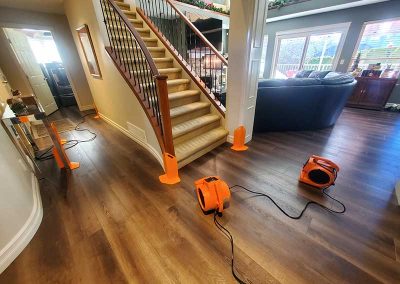
- Accelerating structural drying cycles utilizing commercial-grade axial air movers and advanced low-grain refrigerant dehumidifiers.
- Documenting the exact footprint of the loss and removing completely ruined building materials that cannot be safely salvaged.
- Deep cleaning, sanitizing, and applying EPA-approved antimicrobial washes to completely halt bacterial cross-contamination.
- Performing a comprehensive final moisture audit with high-frequency digital meters to guarantee total structural dryness.
Recognizing the Critical Moments: When to Call an Emergency Restoration Service
When indoor flooding is extensive, if the residential house or commercial office building is deemed structurally unstable, or if you discover wide-spread fungal mold colonies establishing a foothold, contracting professional restoration services is highly recommended. Heavy moisture intrusion poses immediate health concerns, on-site safety hazards, and long-term structural integrity risks to the framing of your property.
While minimal surface dampness can occasionally be addressed independently by an active property owner, complicated flooding situations and large-scale water events must be left entirely to the industry experts. Once again, it is absolutely vital to act fast to avoid cascading property destruction and to keep your family safe from biological hazards.
If you are at all uncertain whether your immediate living space is structurally safe to occupy, do not risk your personal health—call the emergency disaster response team at Mobi Cleaning Services immediately instead of waiting to see if things dry out on their own. The certified cleaning technicians at Mobi Cleaning Services remain completely available 24/7 for emergency dispatch across the region, and our field crew is fully equipped to handle advanced water damage restoration and certified mold remediation services.
Evaluating Your Options: When You Can Manage the Cleanup Independently
In a few specific, minor scenarios, you may be fully capable of safely managing the water extraction and drying process on your own without needing professional intervention:
- The incoming flood water stems entirely from a clean, completely sanitary water supply line.
- The affected footprint of the moisture damage is isolated to a very small section of the floor.
- All wet building materials can be completely dried out and returned to baseline within a 24-hour window.
- There are absolutely no visible signs, hidden moisture tracks, or musty smells of active mold growth.
Serious Red Flags: When It Is Mandatory to Hire a Professional Flood Cleanup Company
It is highly recommended to contact a certified property restoration specialist immediately if your property exhibits any of the following characteristics:
- The indoor flooding involves contaminated gray wastewater or highly hazardous black water sewage back-ups.
- The water destruction covers an expansive surface area, spans multiple rooms, or transitions between different floors.
- You notice fuzzy mold patches forming on surfaces or smell strong, pungent, earth-like musty odors.
- Active moisture has migrated deep inside your drywall framing, plaster ceilings, or structural plywood subfloors.
- You are completely unsure if the flooded building framework is stable or safe to step foot inside.
Proactive Strategies: Preventing Future Water Damage and Flooding
The positive news for property owners is that there are several proactive defensive measures you can take both inside and outside your house to protect your real estate asset, personal possessions, and family from future basement flooding. Despite how frequently indoor flooding emergencies strike homes across the country, the vast majority of homeowners remain completely unprepared for a sudden plumbing crisis.
According to recent insurance industry data, fewer than 20% of property owners take proactive, precautionary steps to safeguard their properties against sudden water damage, which is precisely why establishing a routine maintenance schedule makes such a massive difference.
Executing a routine preventative maintenance check on your property’s plumbing fixtures, fully waterproofing your lower-level basement walls, installing specialized foundation flood vents, and verifying proper exterior landscape grading away from your foundation walls are just a few high-impact strategies you can implement to slash your risk of water loss. In addition to these practical yard and pipe maintenance steps, you should also consider integrating modern smart home technology—such as wireless water leak sensors and automatic main water shut-off valves—which provide incredible protection if a copper line bursts while you are away on vacation or at the office.
Frequently Asked Questions About Professional Water Damage Mitigation
How fast should you respond after discovering indoor water damage?
You must take action immediately without a moment’s delay. The opening 24 to 48 hours represent the ultimate critical window for stopping toxic mold growth and preventing permanent structural wood rot inside your walls.
What is the very first step to take during emergency water mitigation?
The absolute first step is safely stopping the active water leak at its primary source and ensuring the entire affected area is completely free of electrical hazards before any physical cleanup begins.
Is it actually possible to prevent mold growth after a major home flood?
Yes, absolutely. Executing rapid water extraction using professional tools, deploying high-volume industrial drying equipment, and quickly removing ruined building materials will significantly minimize your risk of a mold infestation.
Exactly how long does it take to fully dry out structural water damage?
The structural drying process can take anywhere from 24 hours to several consecutive days, depending entirely on the total volume of trapped water, the specific building materials affected, and the indoor humidity levels.
Can structural water damage be permanently fixed without hiring a professional company?
Small, isolated clean-water accidents can often be managed independently by property owners, but widespread flooding or highly contaminated sewage back-ups must always be handled by certified restoration professionals.
Final Summary
Time is of the absolute essence the very second you spot the initial warning signs of water breaching your residential or commercial property boundaries. To stay ahead of rapid mold colonization and fungal germination, it is vital to act quickly and follow strict mitigation steps to prevent expensive, long-lasting structural destruction from setting in. If you are at all uncertain whether your building’s foundation is safe, or if the flooding damage is extensive, call the certified local professionals at Mobi Cleaning Services for all of your emergency water damage restoration and disaster cleanup needs.
Call Us
778.801.8595
SEND US AN EMAIL
book@mobicleaning.ca
Text Us
778.801.8595
Contact Us For Cleaning Services
Real Results
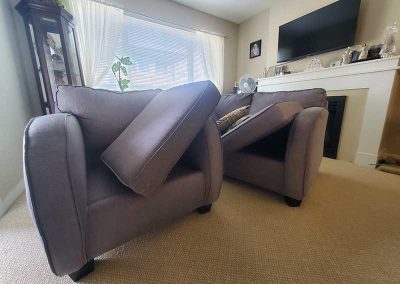
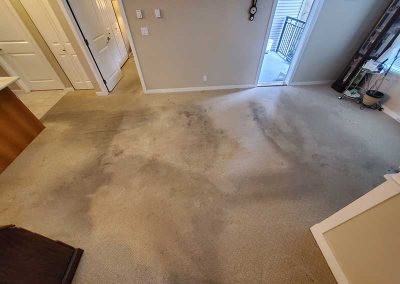
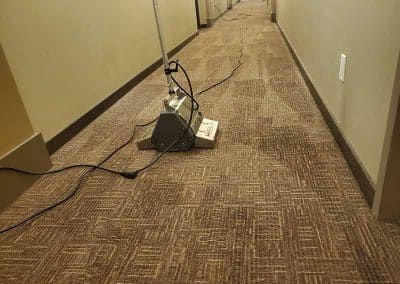
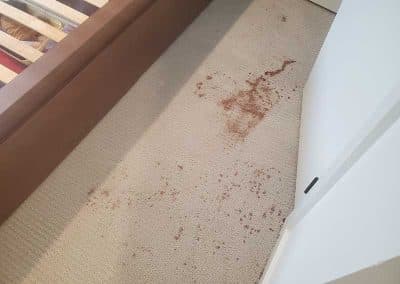
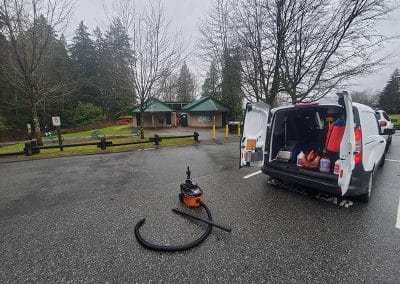
We take tremendous pride in the results we deliver for our clients. The photos speak for themselves.
Why Choose Us
Business License, Criminal Record Check, Trained Technicians, Professional Tools, Professional Solutions, Better Results and Quality, Transparent Pricing and no Hidden Fees, Health Benefits, Professional Operation of Tools, Mobi Cleaning Difference, Flexible Scheduling, On-Time, Maintenance, Great Competitive Value, Customer Satisfaction Focused, IICRC Trained, Green Cleaning, Reputation, Property Protection, Fast Drying Carpets, 100 Percent Satisfaction Guarantee, Experience, Professional Processes, First-Class Service, Fast Response Time, Free Consultation and Estimates, Competitive Pricing and Dedicated Account Manager