












How to Get Oil and Rust Stains Out of a Concrete Driveway
Want to discover how to clean concrete driveways and garage floors like a seasoned professional? The local property maintenance experts at mobicleaning.ca have the ultimate DIY strategies you need. Concrete flooring is no longer restricted to outdoor parking pads, sidewalks, and patios. The immense strength and long-term durability of cement have always made it the perfect choice for high-traffic walkways, but those exact traits are now proving incredibly valuable inside residential homes.
Polished concrete floors are regularly specified for modern indoor basements, contemporary living rooms, and even custom kitchen countertops. Despite this rising trend, many homeowners with indoor concrete finishes are unsure of the safest way to maintain them. While you can easily lease a commercial pressure washer to blast away outdoor driveway grime or greasy garage messes, how do you safely lift delicate indoor concrete stains?
Here is exactly how to provide your residential concrete surfaces with the professional care, deep cleaning, and routine upkeep they truly deserve:
Indoor Concrete Floor Maintenance and Care
Indoor stained concrete surfaces typically require far less intense upkeep than outdoor masonry. This is because indoor cement is almost always treated with a clear protective sealant. Specialized stain removal for indoor concrete floors is rarely needed because this sealed barrier makes the surface nonporous. It actively stops the material from absorbing liquid spills, grease, and tracked-in dirt.
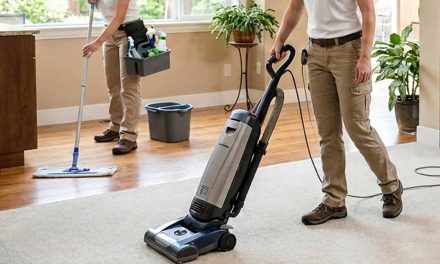
The most effective way to keep indoor concrete looking pristine is through regular dust mopping, vacuuming with a soft brush attachment, and damp mopping with a pH-neutral floor soap. This consistent routine prevents microscopic scratches and dull spots caused by abrasive grit.
You must also remain highly cautious about the specific cleaning agents you choose. Harsh chemical cleansers, acidic soaps, and heavy bleach will rapidly degrade an acrylic sealant or floor paint. Once that protective layer breaks down, the concrete pores open up, leading to permanent discoloration. Check out our local spot removal guides to conquer tough household spills, or reach out to Mobi Cleaning directly for professional indoor concrete cleaning services.
Outdoor Driveway Cleaning and Pressure Washing
Scrubbing outdoor cement surfaces is often trickier. Deep engine grease and oil stains frequently sit for long periods, baking into the surface before any treatment occurs. This deep penetration is precisely what makes outdoor concrete stain removal so challenging. It frequently demands the commercial, truck-mounted pressure washing equipment and advanced training of a skilled local technician.
If you decide to tackle outdoor concrete cleaning as a DIY project, your absolute first step is to clear all loose debris, moss, and dirt from the area. Once the masonry surface is completely cleared and dry, you can accurately evaluate what type of chemical cleaner or degreaser is required to lift the remaining shadow of the stain.
Safety Tips for Handling Powerful Cleaning Chemicals
- Wear Protective Gear: Always equip yourself with heavy-duty rubber gloves and chemical-resistant safety goggles when working with aggressive masonry cleaners.
- Ensure Maximum Airflow: Wear a safety mask or chemical respirator if you are applying potent acid washes or high-fume degreasers, particularly inside enclosed garages.
- Secure the Work Zone: Keep young children and family pets entirely away from the treatment area until the chemicals are fully rinsed away and the concrete has dried completely.
How to Remove the Most Common Concrete Stains
- How to Get Rust Stains Off Concrete Driveways
Metal patio sets, rusty gardening tools, leaking car components, and iron plant stands frequently leave vibrant orange rust blemishes on concrete patios or aggregate driveways. A surprisingly effective household trick to dissolve these unsightly metal stains from your walkways involves unsweetened lemon Kool-Aid powder.
DIY Steps:
- Combine a single packet of unsweetened lemon Kool-Aid powder with hot water, or substitute with straight white cleaning vinegar.
- Pour the acidic mixture directly over the metal rust stain and scrub aggressively using a stiff-bristled nylon brush.
- Wash the treated masonry area thoroughly with fresh water from a garden hose to stop the acid from etching the underlying surface.
- How to Clean Oil Stains from Garage Floors
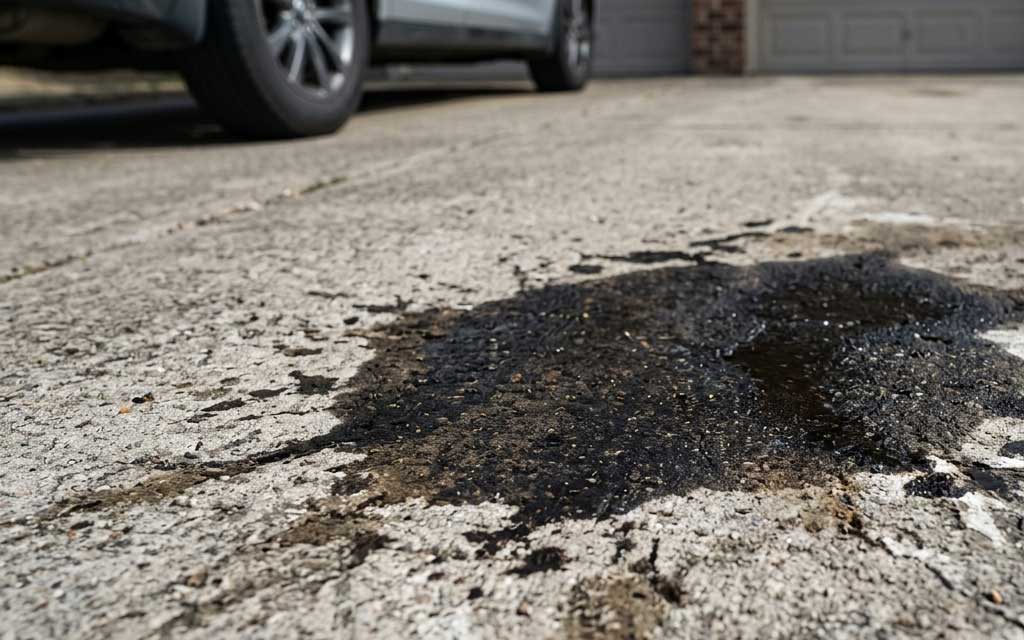
If you notice an automotive fluid spill or a dark grease spot on your floor, you must handle the porous surface with caution. Lifting oil from cement is significantly more challenging than extracting an oil spot from a living room carpet. The primary reason old oil stains are so stubborn on garage concrete is that unsealed cement behaves like a solid sponge. To remove them completely, embedded grease must be chemically broken down and pulled back up to the surface using a structured poultice method.
- How to Clean Car Oil Off a Driveway
Leaking motor oil from cars, trucks, and lawnmowers represents the most frequent driveway blemish in local residential neighborhoods.
- Fresh Spills: To pull out fresh motor oil, blanket the wet puddle completely with clay kitty litter, baking soda, or cornstarch. Grind the absorbent powder into the concrete pores using your feet while wearing old work boots. Sweep up the saturated powder, rinse the area down, and repeat this absorption process as needed.
- Stubborn Shadows: If a dark shadow persists, try spraying a generous amount of WD-40 or a heavy-duty aerosol oven cleaner directly onto the oil spot. Allow the chemical solvent to sit on the concrete for 5 to 10 minutes to break down the grease, then use a high-pressure hose nozzle to blast the residue away.
- Deeply Set Stains: For older, deeply set grease marks, you will save considerable time and physical effort by consulting a professional cement cleaning company like Mobi Cleaning.
- How to Get BBQ Grease Off Concrete Patios
To lift stubborn drippings of cooking grease and food oils from your outdoor masonry or brickwork, create a thick paste using powdered laundry detergent and warm water. Cover the grease spot entirely with a quarter-inch layer of this thick detergent paste. Securely cover the area by taping plastic wrap on top to trap the moisture. Leave the wet poultice paste to react for 24 hours, peel away the plastic cover, scrub the spot with a wire brush, and flush the soapy residue away with clean water.
- Removing Plant and Leaf Stains from Concrete
Scrub a concentrated blend of liquid dish soap and warm water directly onto brown leaf silhouettes or green algae blooms, then rinse the surface using the highest pressure setting on your garden hose nozzle. Alternatively, apply specialized hydrogen peroxide-based outdoor cleaners or oxygen bleach powder instead of standard dish soap for organic blemishes. Let the foaming formula dwell on the leaf stain for roughly 10 minutes, then scrub the concrete in firm, circular motions until the organic discoloration lifts.
- How to Remove Black Tire Marks from Concrete
To erase black rubber tire tracks from your garage floor or driveway, mist the area with water and apply a concentrated commercial engine degreaser. Allow the degreasing solution to break down the tough rubber bonds for several hours, then scrub the black tracks firmly with a stiff-bristled floor brush. Rinse the resulting slurry away thoroughly with clean water, and repeat the degreaser application if any dark rubber shadows remain on the surface.
Proactive Strategies to Keep Concrete Driveways Stain-Free
You can implement a few straightforward preventative maintenance habits to protect your concrete surfaces from tough stains:
- Apply a Concrete Sealer: Protect your surfaces with a premium garage floor sealer or driveway sealer to make the cement highly resistant to liquid absorption.
- Manage Vehicle Leaks Instantly: Wipe up automotive oil spills and chemical puddles immediately to stop them from penetrating deep into the porous concrete structure.
- Utilize Potted Plant Trays: Place plastic drip trays or rubber mats under outdoor planters to catch muddy runoff and prevent orange rust or dark leaf stains.
- Deploy Absorbent Car Mats: Position metal oil drip pans or heavy-duty oil-absorbent garage floor mats under older vehicles to capture leaking motor oil and transmission fluid before it hits the floor.
Troubleshooting Common Driveway Cleaning Problems
The Oil Stain Didn’t Come Out Completely
Reapply your chosen commercial concrete degreaser or DIY poultice solution, allowing it to penetrate the masonry surface for a longer duration before scrubbing vigorously with a stiff wire brush.
Dark Floor Discoloration After Cleaning
Patchy, uneven floor discolouration frequently occurs when applying aggressive muriatic acid washes or undiluted liquid chlorine bleach. Always test industrial-strength concrete cleaners on a tiny, inconspicuous, hidden spot before washing your entire garage parking pad. If your cement suffers permanent chemical burns or etching, you may need to apply a solid concrete stain or heavy-duty garage floor paint to conceal the uneven patch.
Clear Coat and Concrete Sealer Damage
Aggressive driveway cleaning chemicals and industrial degreasers can instantly strip away clear topcoats and topical concrete sealers, leaving your floor highly vulnerable to future automotive oil leaks. If you accidentally dissolve your protective floor coating during the cleanup process, ensure you apply a fresh coat of high-quality concrete sealer once the masonry dries completely.
Frequently Asked Questions About Concrete Care
How often should I pressure wash my concrete driveway and garage?
Scheduling routine driveway cleaning every few months is highly recommended to eliminate surface grime, but you may need to book power washing more frequently if your household vehicles actively leak motor oil or transmission fluid.
Can I safely use liquid bleach to clean concrete?
Chlorine bleach is highly effective at eradicating organic growths like green moss, dark mold, or slippery outdoor mildew, but it must be handled with caution. Always dilute liquid bleach with plenty of water and rinse the concrete surface thoroughly with a garden hose after scrubbing to prevent surface degradation.
What should I do if DIY pressure washing doesn’t remove the oil stain?
For stubborn oil spots or deep iron rust blemishes, it is best to stop scrubbing and contact a local, professional pressure washing company. Often, heavy-duty commercial hot-water pressure washers combined with specialized eco-friendly eco-cleaners are the only tools capable of breaking down old, deep-set automotive stains.
Is high-pressure power washing safe for all concrete surfaces?
Power washing delivers exceptional results for exterior property cleaning but can permanently erode the smooth top cream layer of your cement if the PSI is set too high. Aggressive water pressure can also fracture weakened, aging, or cracked concrete, so always start your pressure washer on its lowest setting utilizing a wide spray nozzle.
How can I prevent black tire marks on my concrete driveway?
Regularly pressure washing your driveways and applying a heavy-duty concrete sealer will significantly minimize the appearance of hot tire marks. Additionally, try to avoid turning your vehicle’s steering wheel completely while the car is stationary or parked on the driveway surface.
For the Most Stubborn Driveway Stains, Mobi Cleaning Can Help
In many situations, budget over-the-counter driveway cleaners from the store can slightly fade light concrete stains, but a flawless result is never a guarantee. The primary reason historic concrete stains are so stubborn is due to how difficult it is to pull deeply embedded engine oil back up to the surface.
Our professional Concrete Floor Care services aggressively attack tough garage and driveway blemishes by lifting away grease trapped deep within the concrete pores. If standard household cleaning and routine pressure washing maintenance are not delivering results, our local team can help you handle the toughest oil and rust spots. Remember, whenever you find yourself feeling frustrated with a dark concrete stain, give your local team at mobicleaning.ca a call for a completely free service estimate!
Call Us
778.801.8595
SEND US AN EMAIL
book@mobicleaning.ca
Text Us
778.801.8595
Contact Us For Cleaning Services
Real Results
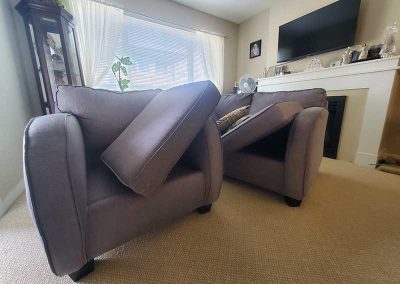
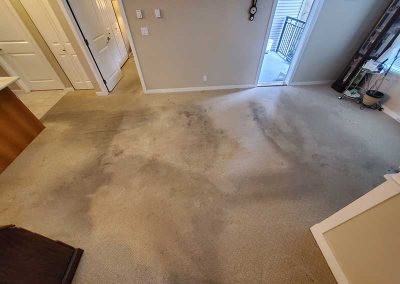
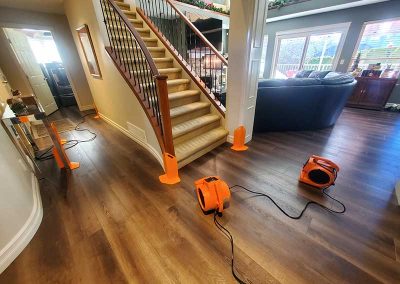
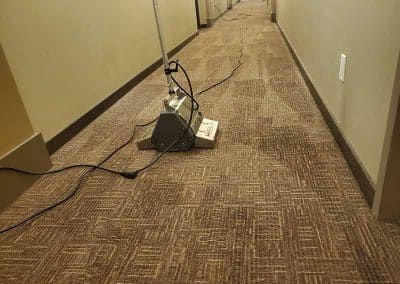
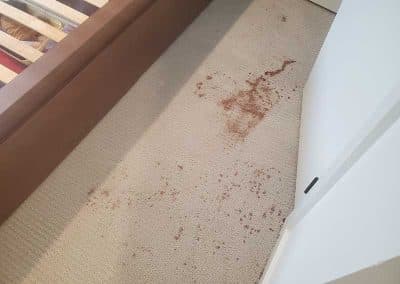
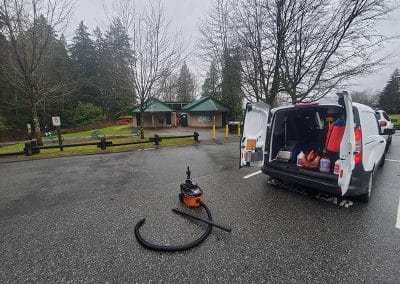
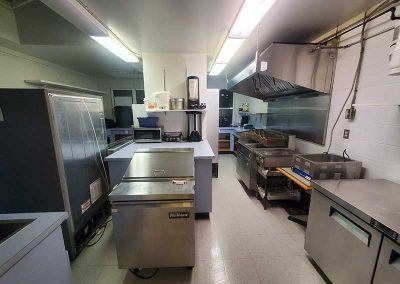
We take tremendous pride in the results we deliver for our clients. The photos speak for themselves.
Why Choose Us
Business License, Criminal Record Check, Trained Technicians, Professional Tools, Professional Solutions, Better Results and Quality, Transparent Pricing and no Hidden Fees, Health Benefits, Professional Operation of Tools, Mobi Cleaning Difference, Flexible Scheduling, On-Time, Maintenance, Great Competitive Value, Customer Satisfaction Focused, IICRC Trained, Green Cleaning, Reputation, Property Protection, Fast Drying Carpets, 100 Percent Satisfaction Guarantee, Experience, Professional Processes, First-Class Service, Fast Response Time, Free Consultation and Estimates, Competitive Pricing and Dedicated Account Manager