







How to Remove Blood Stains from a Couch (New and Dried Spots)
Discovering blood marks on your favorite sofa or armchair can be highly stressful—but these stubborn blemishes are completely fixable with the right approach. Whether you are dealing with a fresh nosebleed accident or an old, set-in spot that refuses to budge, our comprehensive guide is here to support you. At Mobi Cleaning Canada, our experienced field technicians have restored thousands of upholstered furniture pieces across British Columbia, giving us firsthand knowledge of what truly works. In this practical DIY tutorial, we will walk you through exactly how to clean blood off a couch using simple household items you likely have in your cupboards. Should these home remedies fall short, we will also explain when it is best to enlist a professional upholstery cleaning service in Metro Vancouver to safeguard your furniture investment.
Why Blood Spills Are So Hard to Extract from Furniture
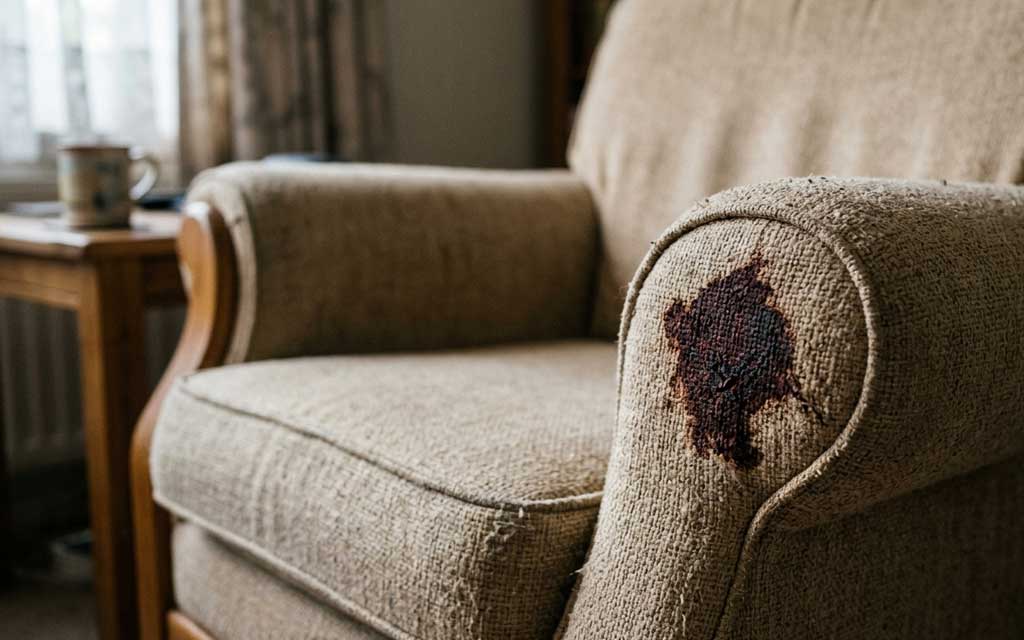
Blood contains organic proteins that rapidly form a chemical bond with fabric fibers, anchoring the pigment deep into the weave as time passes. Unlike standard wardrobe garments, you cannot simply toss a heavy couch cushion or an entire furniture frame into a washing machine cycle. This structural limitation makes it vital to act quickly and treat the soiled area with careful, precise movements to prevent permanent discoloration.
Identify the Age of the Stain First
Fresh fluid spills and aged, dried-on spots demand completely distinct cleaning strategies to achieve successful extraction. New incidents can usually be resolved with minimal effort, whereas old blemishes require extra patience and a slightly more intensive treatment process.
Examine your upholstered furniture carefully before starting:
- Is the mark still damp or wet to the touch?
- Has the area hardened and shifted to a dark brown shade?
If the spot has already dried into a crusty layer, proceed directly to our dedicated dried blood removal steps below.
How to Clean Fresh Blood Off a Couch
Step 1: Blot the Excess Fluid Immediately
Take a fresh white cloth or a clean paper towel and gently press down directly on the spill to absorb the loose liquid. Never rub or scrub the area, as friction will expand the boundaries of the mess and drive the pigment deeper into the underlying cushion foam. Always stick strictly to cold water during this process, because hot water bakes the organic proteins and sets the stain permanently into the fabric matrix.
Step 2: Apply an Inexpensive Club Soda Treatment
Pour a minimal amount of plain club soda directly over the affected fabric zone. Allow the carbonated bubbles to fizz naturally to lift and loosen the blood particles from the individual fibers, then press down firmly with your towel again. Repeat this simple carbonation process several times if the dark color remains visible.
Step 3: Mix a Mild Dish Soap Cleaning Solution
Combine these basic ingredients inside a small container to create an effective homemade upholstery cleaner:
- 1 teaspoon of liquid dishwashing soap (use a gentle brand like Dawn, never harsh automatic dishwasher detergent)
- 2 cups of cold tap water
Submerge a clean white cloth into the soapy mixture and dab the spot with focused, downward pressure. You will see the red colorant begin transferring directly away from your sofa cushion and onto your rag. Continue this meticulous dabbing routine until the blemish fades out completely.
Step 4: Rinse Away Residue and Air Dry the Fabric
Wipe down the treated area with a fresh cloth dampened with clean, cold water to flush away any sticky soap film left behind. Follow up immediately by pressing a dry towel into the upholstery to draw out the remaining moisture. If the spot has disappeared entirely, your cleanup is successful; if a faint outline remains, you may need a stronger commercial laundry spray or our advanced dried stain remedies.
How to Get Dried Blood Stains Out of a Sofa
Aged, set-in blood spots are significantly more stubborn to extract, but they can still be successfully repaired. Begin the recovery process by carefully breaking apart the hardened surface crust. Take a soft-bristled scrub brush or the unsharpened edge of a dull butter knife to gently flake away the dried organic matter. Immediately vacuum up all the loosened particles to keep them from grinding back into the upholstery. Once the loose crust is gone, choose one of these highly effective DIY stain extraction techniques:
Method 1: Isopropyl Peroxide (Strictly for White or Pale Upholstery)
Warning: Hydrogen peroxide behaves like a mild bleaching agent and will strip or fade darker fabric tones. Only deploy this specific strategy if your armchair or sofa is pure white or light beige. Always complete a spot test on an unexposed piece of fabric first. Moisten a cotton swab or a clean white rag with 3% hydrogen peroxide. Gently tap the stained area and observe as the chemical solution begins to foam up. Allow the bubbling action to work for roughly 30 seconds before dabbing it dry with a fresh paper towel. Repeat this process one or two more times, flush the fibers with cold water, and pat the area dry.
Method 2: Homemade Vegetable Glycerin + Laundry Soap Spray
This alternative is a much gentler, fabric-safe furniture cleaner that you can confidently use on most upholstery materials:
Combine these exact ingredients inside a clean spray bottle:
- 80% clean, cold water
- 10% pure vegetable glycerin
- 10% standard liquid laundry soap
Mist the mixed solution lightly over the mattress or sofa fabric without over-saturating the interior cushion. Allow the cleaning spray to sit and break down the spot for 5 minutes, then lift it away using a white microfiber cloth. Sponge the area with a small amount of clean water to rinse, then compress a dry towel over the spot to absorb wetness. This particular technique yields the best results with repetition, so you may need to apply it multiple times for deep stains.
Always Inspect the Fabric Care Tag Before Cleaning
Before applying any DIY solutions or store-bought chemicals to your valuable furniture, locate the manufacturer’s upholstery care label.
This tag features a universal cleaning code that dictates what treatments are safe:
- W: The fabric safely accepts water-based cleaning solutions and liquid soaps.
- S: The material requires dry-cleaning solvents and must stay completely water-free.
- W/S: Both specialized dry solvents and water-based treatments are completely safe.
- X: Do not use liquids or chemicals—vacuum only, or hire professional upholstery cleaning near me.
If the care label is missing or illegible, do not risk ruining your furniture piece. Delicate upholstery textiles can shrink, bleed color, or warp very easily when treated incorrectly.
Critical Mistakes to Avoid When Spot-Treating Furniture
To prevent an easy-to-fix spill from turning into a permanent structural blemish, avoid making these common household errors:
- Never apply warm or hot water, as high temperatures permanently bake organic protein spills like blood into fabric matrices.
- Stop scrubbing aggressively, which only deforms the pile and drives the pigment deeper into the underlying cushion foam.
- Do not use brightly colored towels, because the factory fabric dye can easily bleed onto your couch cushion.
- Avoid over-wetting the furniture, as trapped excess moisture inside the deep padding leads to toxic mold or mildew growth.
When DIY Tricks Fail: Hire a Professional Couch Cleaner in BC
Certain stubborn, aged blemishes simply cannot be lifted without commercial hot-water extraction equipment and field experience.
If you have tried multiple home remedies without success—or if your sofa features high-end fabrics like velvet, suede, or genuine leather—let certified experts manage the task.
At Mobi Cleaning Canada, we utilize top-tier industrial deep cleaning tools and eco-safe products that are entirely safe for your upholstery. We proudly serve residential and commercial properties throughout Vancouver, Richmond, Burnaby, Surrey, Coquitlam, and the surrounding Lower Mainland communities. Our advanced steam extraction systems also eliminate stubborn pet odors while fully sanitizing your entire seating area.
The Bottom Line
Whether your child had an accidental bloody nose, your family pet cut their paw, or you faced an unexpected period leak, furniture blemishes happen to everyone. Life gets messy, but if you use the correct targeted stain remover, you can typically handle the cleanup yourself at home. Should you hit a wall during the process, our local certified cleaning technicians are just a quick phone call away. Looking to fix a completely different type of household spill? Take a look at our complete stain removal resource guide.
Frequently Asked Questions (FAQs)
Can I use hydrogen peroxide on a fabric sofa?
- Answer: Yes, but only if the furniture material is solid white or pale gray, and the care code displays a W or W/S marking. Because peroxide carries mild bleaching properties, it will ruin darker fabrics—making a hidden spot test mandatory.
What is the fastest way to get blood out of fabric?
- Answer: The absolute fastest method is pressing a clean cloth soaked in cold water over the spill the second it occurs. Applying club soda or liquid dish soap immediately keeps the proteins from binding permanently to the fibers.
Does white vinegar remove blood stains?
- Answer: While distilled white vinegar works beautifully on coffee spills or hard water marks, it is not the ideal tool for blood. Because blood is an organic protein, you will see much faster results using liquid dish soap, hydrogen peroxide, or enzyme-based cleaners.
Can Mobi Cleaning Canada get stains out of leather or suede?
- Answer: Yes! Mobi Cleaning Canada specializes in advanced stain extraction for delicate vintage textiles, suede, and genuine leather across British Columbia. These delicate skins require specialized low-moisture tools and targeted leather conditioners to preserve their natural texture.
What should I do if my couch tag is marked with an ‘X’?
- Answer: If your furniture care label features an ‘X’ code, you must avoid water, household soaps, and traditional retail dry-cleaning fluids entirely. Your only safe options are routine vacuuming or hiring a certified Lower Mainland professional upholstery service to avoid permanent fabric ruin.
Call Us
778.801.8595
SEND US AN EMAIL
book@mobicleaning.ca
Text Us
778.801.8595
Contact Us For Cleaning Services
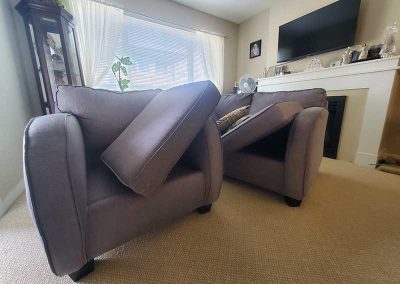
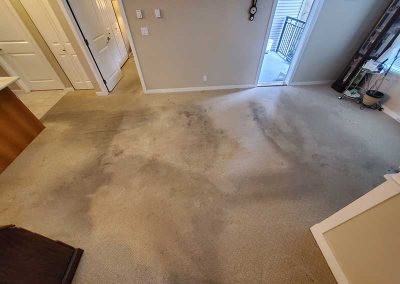
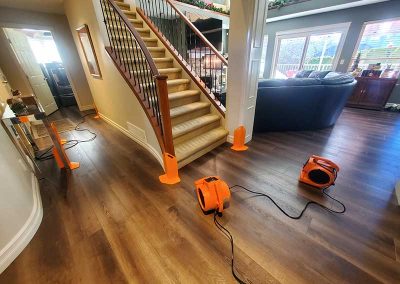
Real Results
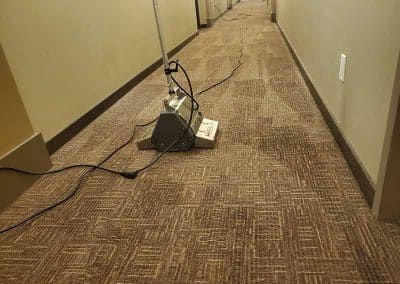
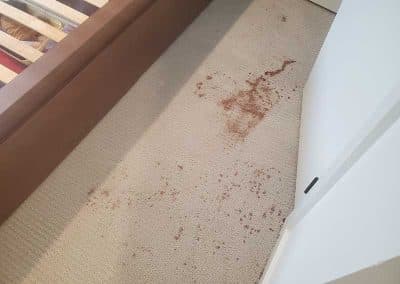
We take tremendous pride in the results we deliver for our clients. The photos speak for themselves.
Why Choose Us
Business License, Criminal Record Check, Trained Technicians, Professional Tools, Professional Solutions, Better Results and Quality, Transparent Pricing and no Hidden Fees, Health Benefits, Professional Operation of Tools, Mobi Cleaning Difference, Flexible Scheduling, On-Time, Maintenance, Great Competitive Value, Customer Satisfaction Focused, IICRC Trained, Green Cleaning, Reputation, Property Protection, Fast Drying Carpets, 100 Percent Satisfaction Guarantee, Experience, Professional Processes, First-Class Service, Fast Response Time, Free Consultation and Estimates, Competitive Pricing and Dedicated Account Manager