














How to Manage Structural Water Damage Resulting from Frozen Plumbing Lines
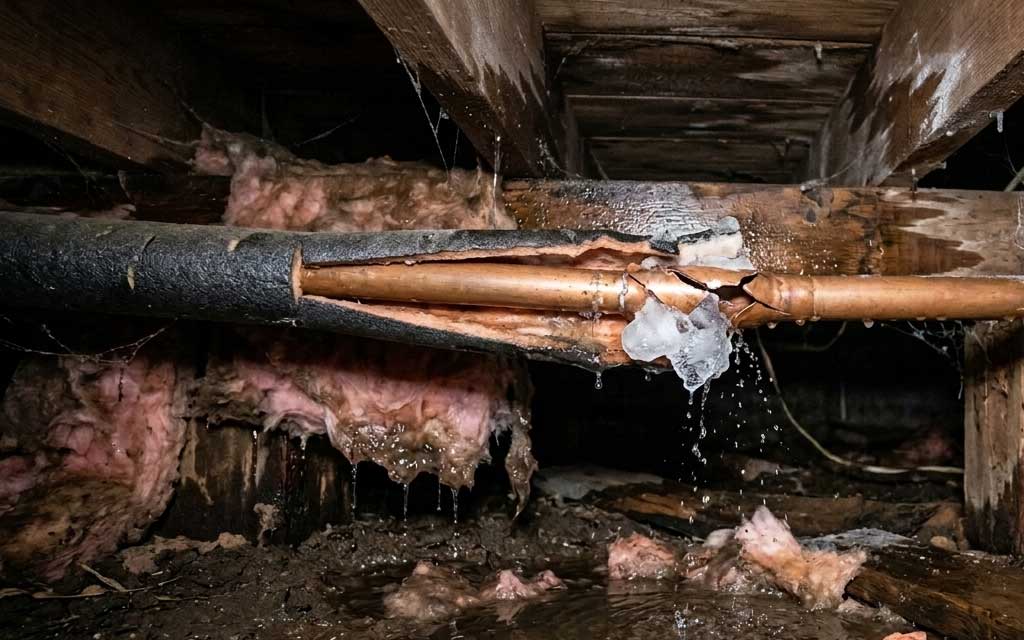
Due to the intense arctic outflow winter cold snaps that large swaths of British Columbia routinely face, frozen water lines have manifested as a frequent, highly disruptive property nuisance demanding professional moisture mitigation services for residential homeowners and commercial operators alike. Water lines freezing solid stands as the primary catalyst behind ruptured piping networks that trigger incredibly expensive property destruction from Metro Vancouver all the way through the Okanagan Valley. When environmental temperatures plummet below the freezing threshold across BC, stagnant water trapped inside your supply lines can solidify into dense ice mass and progressively expand. This physical transformation exerts immense, unyielding hydrostatic pressure against your plumbing walls, which can in turn cause the lines to crack, fracture, and violently burst.
In a vast number of situations, a BC residential property owner or commercial building manager may not even recognize that their internal distribution lines have ruptured until the frozen blockages begin to thaw during a mild Pacific warm front, unleashing an active indoor flood. You might simply be away from your property for the day enjoying local outdoor recreation, only to return home to discover deep pools of moisture collecting across your flooring systems due to indoor flooding from infrastructure left compromised after a harsh sub-zero winter freeze.
Quick Emergency Action Plan: Immediate Mitigation Procedures
If you find yourself facing a freshly ruptured supply pipe or active water leaking inside your living space, move with absolute speed and engage emergency water damage services in BC to drastically reduce structural degradation and electrical safety threats.
- Turn off your main municipal water isolation valve immediately to halt the incoming flow.
- Disconnect the electrical breakers supplying the affected structural zones if standing water is migrating near outlets, baseboard heaters, or appliances.
- Open your lowest sink faucets and flush all household toilets to rapidly relieve residual system pressure.
- Utilize a mop or absorbent towels to blot up standing pools, minimizing the volume of water soaking into subfloors and drywall assemblies.
- Relocate vulnerable furniture arrangements, electronics, and personal valuables entirely away from the damp zones.
- Create an exhaustive visual record of the disaster using high-resolution photos or video walkthroughs for your Canadian insurance provider.
- Connect with a licensed local plumber alongside an accredited BC disaster restoration firm to initiate structural diagnostics and high-velocity drying.
Because toxic fungal colonies can begin germinating within a brief 24 to 48-hour window, the sooner you execute defensive measures and bring in professional BC water damage services, the less costly and logistically complicated your eventual property cleanup will be.
Analyzing the Root Causes of Burst Water Lines
While freezing outdoor temperatures represent the primary trigger behind ruptured plumbing lines, several other underlying structural anomalies can also accelerate pipe fractures and severe water damage across the Pacific Northwest.
When deep rust and heavy mineral corrosion accumulate inside your copper, galvanized, or PEX plumbing lines over several decades, for example, the core structural material degrades and becomes significantly more vulnerable to sudden bursting under pressure. Mature trees positioned adjacent to your underground utility corridors can also extend aggressive root networks that pierce through pipe seams, culminating in hidden subterranean cracks, severe blockages, and gradual leaks.
Significant underground soil shifting caused by nearby heavy construction machinery, seasonal coastal temperature fluctuations, or foundational plumbing system repairs can easily crack water lines, just as excessive municipal water pressure and deep-seated clogs can stress joints from deep within the building infrastructure.
Why the freezing process is uniquely destructive to plumbing:
When liquid water transitions into solid ice, its physical volume expands by approximately 9%, which drastically escalates internal pressure parameters within enclosed plumbing—meaning even heavy-duty copper lines or industrial PVC walls can rupture under that intense molecular strain. This expanding force has no clear avenue of escape, causing the pipe assembly to burst at its weakest structural point, which frequently occurs completely out of sight behind insulated drywall, directly under kitchen sinks, or within unheated crawl spaces and concrete parkades.
Visual and Auditory Indicators That Your Water Pipes Have Burst
If you hold a strong suspicion that your property is dealing with broken distribution lines, your immediate priority should be to survey the area for visual indicators of moisture migration and request expert local water damage services. Standing pools will typically feature a much larger footprint and spread significantly wider in the event of a total pipe burst compared to a standard slow leak, so carefully audit for pooling water under bathroom vanities, near exposed pipe fittings or shutoff fixtures, and surrounding toilets, kitchen dishwashers, and laundry washing machines.
Another critical warning sign to monitor is a sudden drop in your regular plumbing pressure, given that deep cracks in your distribution loops will actively restrict the normal volumetric flow of water to your fixtures. You may also observe spreading dark stains or bubbling paint across your drywall surfaces and subfloors that indicate an internal pipe breach has occurred. If historical rust corrosion serves as the hidden driver behind the split water line, you might also spot a distinct reddish-brown discoloration or detect a sharp metallic odor emanating from your running tap water.
In alternative scenarios, you might actually be able to hear physical indicators of a compromised water line echoing from deep inside your wall cavities. The sound of continuous, muffled dripping, for instance, could serve as a direct acoustic verification that an internal pipe segment has ruptured. If you log into your municipal account and notice your water utility bill is drastically higher than your historical average, that sudden financial spike can frequently be linked directly to a cloaked, underground pipe burst.
Rapid mold and mildew propagation can serve as another definitive indicator of an ongoing water breach, particularly when taking into account British Columbia’s naturally humid coastal climate. If the standing water pools you uncover exude a pungent, stagnant, or earthy smell, the fluid leaking from the broken pipe has likely mixed with soil or structural debris and may be bio-contaminated—presenting a potential threat to your physical health.
Regardless of whether you explicitly hear, see, or smell an anomaly within your layout, it is highly vital to take immediate corrective action and seek professional water damage services the exact moment you suspect a pipe has failed. It requires very little time for a frozen supply line to inflict catastrophic structural damage upon your home or commercial asset. In the ongoing presence of standing water, it takes a mere 24 to 48 hours for active mold and mildew to take root—and once fungal colonies establish, they can easily cause or severely worsen chronic respiratory ailments.
Water intrusion resulting from frozen pipe failures can also cause structural structural wood framing to warp, rot, and decay, culminating in incredibly expensive structural damage to the property foundation. Water surging from ruptured lines can additionally wreak absolute havoc on wall-to-wall carpets, hardwood flooring, ceiling drywall, upholstered furniture, and your irreplaceable personal belongings.
How to Thaw Frozen Distribution Lines Safely
On certain occasions, plumbing lines will freeze solid but have not yet breached their structural walls, meaning rapid intervention can rescue the line before it requires extensive water damage restoration services. Here is how to raise their temperature safely:
- Open the specific plumbing faucet located closest to the frozen blockage so that melting ice water can immediately vent out of the system.
- Warm the targeted pipe segment gradually utilizing a standard handheld hair dryer, flexible electric heating pads, or a portable space heater positioned a safe distance away. Advance slowly along the length of the plumbing line until normal water pressure returns to the fixture.
- Never utilize an open flame, propane torch, or blowtorch, as these unsafe heat sources can instantly ignite nearby insulation materials or cause catastrophic thermal shock to the pipe.
- Audit your building’s unheated zones first (such as subterranean basements, uninsulated attics, low-clearance crawl spaces, detached garages, or commercial parkades) where freezing events are statistically most prevalent.
- If you are completely unable to isolate the frozen pipe section or if normal water flow fails to return after gentle heating, contact a licensed plumber immediately.
Attempting to thaw a line too rapidly or deploying unsafe, high-heat methods can cause a compromised pipe to burst right in front of you, meaning patience and controlled, gentle heat application are key to a successful save.
When Water Lines Burst, Do Not Delay Your Response
To minimize the scale of structural property destruction while actively mitigating ongoing health risks to building occupants, here are the vital operational steps to take the absolute second you realize your lines have ruptured and you require professional water damage services in British Columbia:
- Turn off your main water supply gate immediately to prevent further interior flooding.
- Cut power to the affected electrical grids if standing water is approaching outlets or appliances to eliminate shock and electrocution hazards.
- Open multiple faucets and flush your toilets to vent residual backpressure and safeguard against further pipe fractures.
- Isolate and temporarily plug or wrap the breach if accessible to help contain the spread of escaping water.
- Contact a licensed local plumber to swiftly cut out and repair the broken, burst, or cracked section of pipe.
- Begin extracting surface moisture utilizing household mops and fans, but hold off on handling deep cleanup if you hold any suspicion of greywater or blackwater contamination.
- Meticulously document all structural damage with high-quality photos to help expedite and streamline your insurance claim process with your Canadian policy provider.
- Call for professional water damage services immediately to arrest toxic mold growth, which regularly develops within 24 to 48 hours, and to deploy industrial structural drying systems.
Navigating Property Insurance and Restoration Costs After a Plumbing Failure
Is internal moisture damage resulting from frozen water lines covered by standard property insurance?
In the vast majority of scenarios, yes, comprehensive British Columbia residential property insurance policies supply financial coverage for sudden, unpreventable indoor flooding events, making it significantly easier to secure professional water damage mitigation services following a severe pipe rupture. However, your structural restoration claim might face an official denial or complication if major underwriters like BCAA, Square One, or your private Canadian insurance brokerage determine that the disaster stemmed directly from homeowner negligence, such as completely shutting off your climate controls or failing to sustain adequate ambient heat inside your building during an extreme sub-zero arctic winter freeze.
To ensure your insurance claim progression moves forward as smoothly as possible:
- Initiate direct contact with your dedicated insurance provider immediately to provide an explicit explanation of the plumbing breach.
- Secure an exhaustive archive of high-resolution photographs and videos detailing all affected areas before your initial cleanup processes commence.
- Systematically preserve every single digital record and paper invoice issued by your responding plumber and restoration technicians.
- Retain and isolate all water-logged structural materials rather than throwing them away until your designated claims adjuster has physically inspected the site.
Policy boundaries, coverage limits, and emergency deductibles fluctuate drastically across various insurance providers operating across British Columbia, meaning it is highly beneficial to review your specific residential policy fine print before winter cold snaps arrive to verify exactly what forms of disaster relief are included.
Demystifying the Financial Costs of Flood Cleanup and Property Repairs
The definitive financial investment required to hire professional water damage services to remediate indoor flooding caused by frozen plumbing lines depends entirely on how rapidly you execute your emergency action plan and how much total square footage across your Lower Mainland or BC interior property has been compromised.
- Minor Seepage Managed Early: Can require an investment of as little as $500 to $1,000 to execute localized structural fixes and moisture extraction.
- Moderate Flooding and Wall Saturation: Can quickly ascend into a cost structure ranging from $2,000 to $5,000 in advanced mechanical mitigation and structural drying fees.
- Severe Structural Violations or Secondary Mold Outbreaks: Can easily eclipse a threshold of $10,000, particularly if vast sections of structural drywall, finished flooring, or fiberglass insulation batts must be completely stripped away and replaced by certified technicians.
Comprehensive structural drying and professional home dehumidification cycles typically require between three and five business days to achieve safety equilibrium, whereas complete aesthetic reconstruction and finish carpentry may span several weeks depending on the availability of specific building materials and residual subfloor moisture readings.
How to Shield Your Property from Future Frozen Pipe Cracks
The absolute finest methodology for bypassing expensive property restoration bills is to physically stop your plumbing infrastructure from freezing solid in the first place, saving your household from ever needing to call for emergency water damage services during seasonal cold snaps.
- Wrap all exposed distribution lines traversing unheated attics, basements, crawl spaces, and garages using specialized foam insulation sleeves or automated electric heat tape.
- Meticulously seal off external drafts, foundational cracks, and gaps surrounding window frames or exterior doors to actively block sub-zero air currents.
- Maintain your central climate thermostat settings at a baseline minimum of 55°F (13°C) at all times, even when you plan to vacate the property for several days.
- Proactively swing open your vanity and kitchen cabinet doors beneath plumbing sinks to permit warm household air to circulate freely around hidden lines.
- Allow your furthest household faucets to emit a slight, continuous drip during extreme weather shifts to vent built-up hydrostatic system pressure.
- Completely disconnect, drain, and store all outdoor garden hoses well before the arrival of late-autumn frosts.
- Conduct systematic physical walk-throughs of your property’s plumbing access points during extreme cold snaps to isolate early freezing signs before a pipe splits.
If your calendar includes travel away from British Columbia during the peak winter months, arrange for a trusted friend, family member, or neighbor to check on your real estate asset periodically, or install a smart, Wi-Fi-connected thermostat alongside wireless moisture sensors that can instantly broadcast automated emergency alerts straight to your smartphone the second indoor temperatures plunge or moisture is detected.
rewrite the text line by line and do not condense and make it more original for mobicleaning.ca and seo friendly so it ranks high in search engines
Why Professional Restoration Matters
Even a minute amount of residual moisture left behind after a burst pipe can rapidly lead to toxic mold growth, wood rot, and severe structural damage. While superficial surface cleanup might make your floors look dry to the naked eye, trapped moisture often seeps deep into subflooring, drywall assemblies, and insulation cavity spaces, which are tight areas that standard household fans simply cannot reach without specialized water damage services.
Professional restoration teams utilize industrial-grade water extraction equipment, specialized moisture meters, and HEPA-filtered dehumidifiers to ensure your entire home is completely dry and safe. Certified technicians can also deeply sanitize and deodorize affected areas to prevent future bacterial contamination or lingering musty odors.
The Hidden Dangers of Mold and Contamination
Fungal mold and mildew can physically appear within 24 hours of initial water exposure and quickly spread throughout your indoor environment via airborne spores. These microscopic spores can heavily aggravate allergies, asthma, and various other chronic respiratory conditions, highlighting the need for prompt water damage services in BC’s naturally humid climate.
If you notice a strong musty smell, visible black spotting, or persistent dampness on your walls, it is best to contact restoration professionals right away. The certified specialists at Mobi Cleaning Canada use safe, industry-approved methods to eliminate mold colonies at their absolute source and fully restore healthy indoor air quality.
Leave the Restoration to the Professionals
Calling in specially trained, independently certified experts who provide comprehensive water damage services is absolutely essential to restoring your property and personal belongings back to their original pre-loss condition, minimizing further property devaluation, and ensuring your living space is completely deconditioned to protect the physical health of your family or occupants.
The experienced, certified property restoration professionals at Mobi Cleaning Canada are always ready to respond rapidly following a burst water pipe and resulting flood emergency anywhere in the region. We will help you thoroughly inspect and assess the moisture migration, salvage and restore your valuable personal belongings, halt mold growth with industrial-grade drying technology, completely sanitize affected structural areas, and get your daily life back to normal. Our professional property restoration team is available 24/7 for emergencies.
If frozen pipes have burst inside your residential home or commercial business, schedule an appointment online or call Mobi Cleaning Canada today for immediate, professional water damage services, cleanup, and structural drying before the damage spreads any further.
Frequently Asked Questions About Water Damage from Frozen Pipes
How do I know if my pipes are frozen or just blocked?
To tell if your plumbing lines are frozen or simply blocked by a clog, start by turning on several different faucets throughout your property. If water flows completely normally from some taps but only drips or fails to emerge at all from others, that is a definitive sign of a localized frozen section rather than a standard plumbing clog. You may also notice visible frost accumulating on exposed pipe segments or hear strange gurgling noises inside the walls as ice blocks the flow.
Can I thaw frozen pipes myself?
Yes, you can safely thaw frozen pipes on your own if the affected plumbing section is easily accessible and has not cracked or split open yet, avoiding the immediate need for emergency water damage services. The safest methodology to thaw a frozen line is by applying gentle, consistent heat directly to the area—such as using a handheld hair dryer, an electric heating pad, or placing a portable space heater nearby. Never use an open flame, propane torch, or blowtorch to thaw frozen lines, as this extreme heat can cause the pipe to instantly burst or accidentally ignite nearby building materials. If you are unsure where the frozen block is located or do not see immediate improvement within a few minutes, call a licensed plumber for professional assistance.
How long does it take to fix water damage from a burst pipe?
Fixing water damage from a ruptured plumbing line typically begins with professional water damage services involving complete extraction and structural drying, which can take anywhere from two to five days depending on the volume of water released. Full property restoration—including replacing damaged drywall, installing new flooring, and replacing insulation—may take up to two weeks or longer for severe flooding cases. The faster you initiate the professional drying process after a line ruptures, the quicker the structural repairs will be completed and the lower your overall insurance or out-of-pocket costs will be.
What should I do if my house floods while I’m away?
If your house suffers a flood while you are away from the property, locate and shut off the main water supply valve and cut the power to the affected electrical zones as soon as it is entirely safe to do so. Next, contact your home insurance provider right away to initiate a property claim and meticulously document all structural and content damage using photos or video. Finally, contact the 24/7 emergency response team at Mobi Cleaning Canada to access immediate water damage services, rapidly extract standing water, dry the structural framing, and stop mold growth before it can establish itself—even if you are not physically on-site to manage the cleanup yourself.
The Bottom Line
If you are currently dealing with indoor flooding from frozen, burst plumbing lines, don’t wait around for the structural problem to get progressively worse. The certified specialists at Mobi Cleaning Canada are available 24/7 to provide professional water damage services, extract standing water, dry and deeply sanitize your property, and stop destructive mold before it starts growing.
We will expertly handle every single step of the mitigation process—from the initial moisture inspection to full structural restoration—so you can get back to normal much faster. Call Mobi Cleaning Canada today or schedule an emergency service online right now to protect your home from permanent structural damage.
Call Us
778.801.8595
SEND US AN EMAIL
book@mobicleaning.ca
Text Us
778.801.8595
Contact Us For Cleaning Services
Real Results
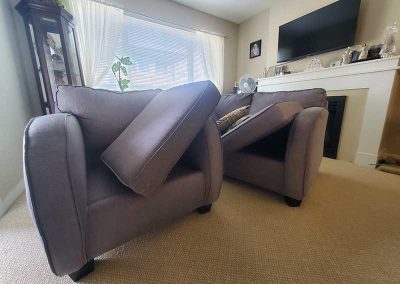
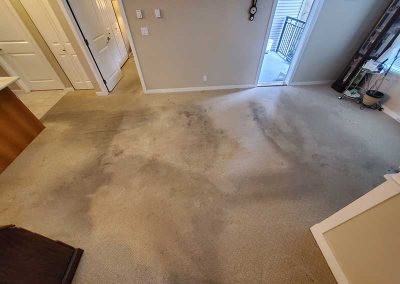
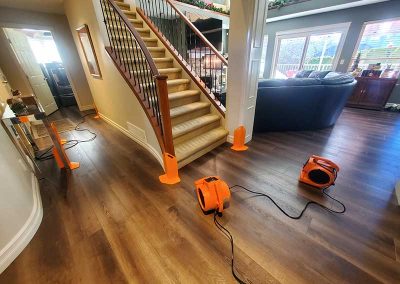
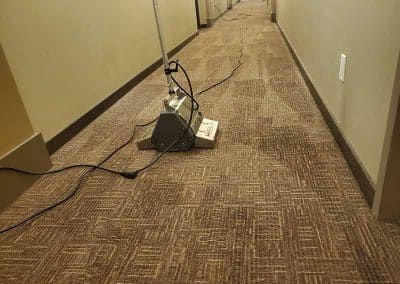
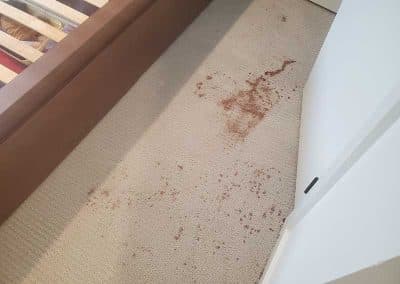
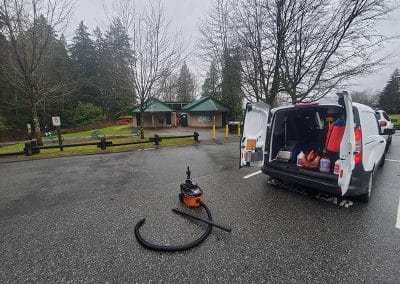
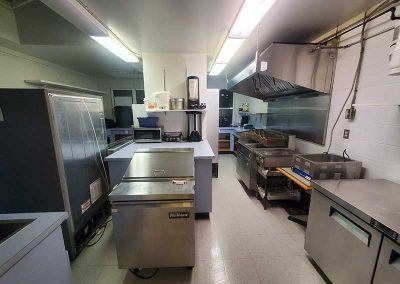
We take tremendous pride in the results we deliver for our clients. The photos speak for themselves.

Why Choose Us
Business License, Criminal Record Check, Trained Technicians, Professional Tools, Professional Solutions, Better Results and Quality, Transparent Pricing and no Hidden Fees, Health Benefits, Professional Operation of Tools, Mobi Cleaning Difference, Flexible Scheduling, On-Time, Maintenance, Great Competitive Value, Customer Satisfaction Focused, IICRC Trained, Green Cleaning, Reputation, Property Protection, Fast Drying Carpets, 100 Percent Satisfaction Guarantee, Experience, Professional Processes, First-Class Service, Fast Response Time, Free Consultation and Estimates, Competitive Pricing and Dedicated Account Manager