












How to Get Dried Paint Out of Carpet: Step-by-Step Removal Guide
Accidental spills can quickly transform a fun weekend home improvement project into a stressful flooring nightmare. The trick to rescuing your fibers lies in identifying whether you are dealing with water-based latex or heavy oil-based pigments—particularly once the spill cures and hardens.
In this professional DIY restoration guide, our team at Mobi Cleaning Canada outlines proven methods to extract stubborn, crusty paint using basic household supplies and expert stain removal secrets.
The Fast Method to Remove Dried Paint from Carpet
To eliminate dried paint build-up, carefully break apart and scrape away the top crust with a dull tool, then reconstitute the bound pigments using warm water or a penetrating lubricant like WD-40. Next, aggressively blot—never rub—the area using a white microfiber cloth saturated with dish soap or isopropyl alcohol, rinse thoroughly with fresh water, press dry, and vacuum to revive the pile.
5 Steps for Emergency DIY Paint Extraction:
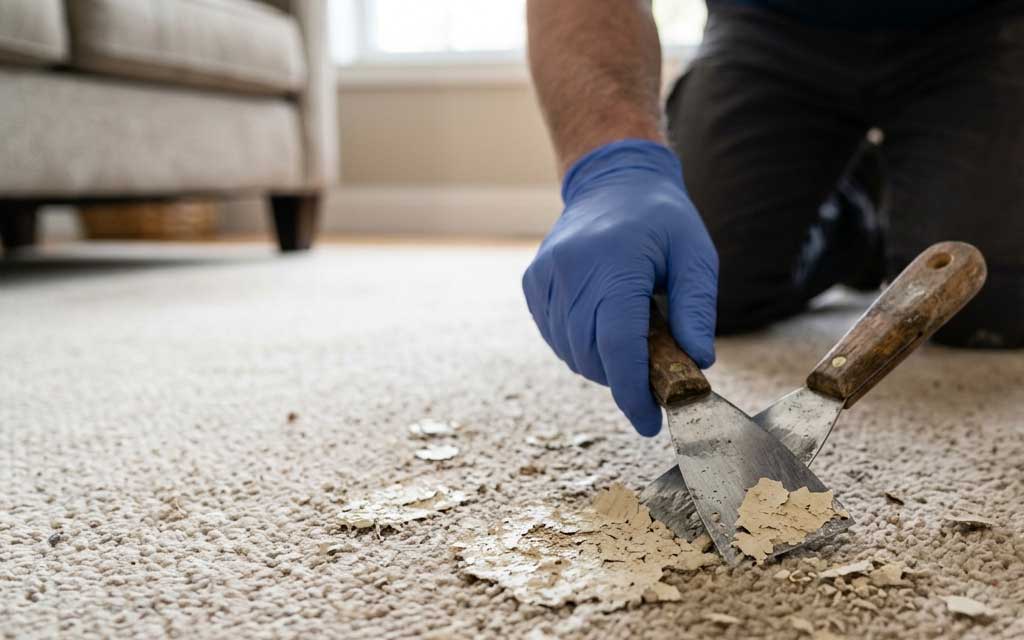
- Break up the crust: Gently pry away dried paint flakes using a spoon or a dull butter knife.
- Rehydrate the spot: Apply warm water, vinegar, or WD-40 to liquefy the hardened residue.
- Blot the pigment: Transfer the loosened color onto a clean rag soaked in liquid dish detergent or rubbing alcohol.
- Neutralize and rinse: Flush the targeted carpet fibers with clear water and press dry with a heavy towel.
- Restore the pile: Vacuum the dried area thoroughly to lift and fluff the matted carpet texture.
Different chemical compositions demand entirely different treatment strategies once they lock into your flooring. Below, we break down how to identify your specific spill, how to treat it safely without ruining your carpet backing, and exactly when to call Mobi Cleaning Canada for a professional deep-tissue steam extraction.
Identifying Your Paint Spill: Latex vs. Oil-Based
- Water-Based Stains (Latex & Acrylic Paints)
Water-soluble formulas, widely recognized as household latex or artistic acrylics, dominate interior walls and DIY crafting spaces. Property owners prefer them due to their rapid dry times and hassle-free cleanup properties. This category covers everyday ceiling paint, hobbyist acrylics, and standard exterior house primers.
Successfully tackling a latex spill requires a basic understanding of how acrylic polymers cure. Fresh, wet water-based formulas feature a thinner viscosity and emit a mild, non-chemical scent compared to oil alternatives. You will notice the wet color often appears a shade lighter than its final cured state, and the manufacturer’s label will explicitly state that cleanup requires only basic soap and water.
Once fully cured, however, latex presents a much tougher obstacle. As the moisture content evaporates, the remaining plastic resins bond together into a rigid, plastic-like shell around the carpet fibers. Fortunately, with steady patience and the correct solvent breakdown techniques, you can completely erase these hardened spots.
- Oil-Based Stains (Enamels, Varnishes, & Lacquers)
Prized for maximum durability and high-gloss aesthetics, oil-based formulas shield high-wear architectural elements. You will typically find these heavy-duty coatings applied to kitchen cabinetry, baseboards, crown molding, and exterior metal or wood furniture. This class encompasses industrial enamels, wood varnishes, lacquers, and deep-penetrating stains.
These professional-grade finishes carry a thick, syrupy consistency and a heavy, pungent chemical odor. Unlike latex, the color remains completely identical from its wet state to its final dried finish. The warning labels on these cans will explicitly direct you to use mineral spirits, turpentine, or commercial paint thinners for any cleanup efforts.
Stripping dried oil pigments out of deep carpet piles is a notoriously difficult task because the substance completely repels water and cures with immense adhesive strength. However, by deploying targeted chemical solvents and precise blotting movements, you can lift away both fresh drips and ancient, dried-on splatters.
Your DIY Carpet Stain Removal Toolkit
Before starting your emergency spot cleaning process, assemble these essential household supplies:
- Scraping Tool: A heavy metal spoon or a dull butter knife
- Absorbent Media: Clean white cotton rags, white paper towels, or microfiber cloths
- Surfactant: Premium grease-cutting dish soap (such as Dawn)
- Solvent Base: Clean, warm water
- Breaking Agent: Clear isopropyl rubbing alcohol (70% or higher)
- Penetrant: WD-40 multi-use spray or an equivalent household lubricant
- Heavy Solvent: Goof Off, heavy-duty Goo Gone, or a dedicated latex paint remover
- Extraction & Finishing: A reliable upright or canister vacuum cleaner
How to Remove Dried Paint Stains
Dried Water-Based Paint Stains
- Extract the Crust: Carefully shave away the hardened, brittle surface residue using a dull butter knife or spoon.
- Infuse Warm Moisture: Drizzle a minimal amount of hot water over the remaining spot to reconstitute the bound polymers.
- Lift with Surfactants: Apply a few drops of grease-cutting liquid dish soap and delicately press a clean white cloth into the fibers.
- Flush and Revive: Once the pigment transfers, rinse with fresh water, press a dry towel to absorb dampness, and vacuum.
Dried Oil-Based Paint Stains
- Break the Bond: Mist WD-40 or an equivalent household lubricant directly onto the patch to dissolve the rigid shell.
- Absorb the Pigment: Allow the formula to penetrate for several minutes before lifting the dissolved color with a white microfiber cloth.
- Apply a Technical Solvent: If stubborn discoloration remains, use a fresh rag to press clear isopropyl rubbing alcohol into the fibers.
- Neutralize and Finish: After the stain clears, flush out the chemical residue with warm water, towel-dry completely, and vacuum.
How to Remove Wet Paint Stains
Fresh Water-Based Paint Stains
- Blot, Do Not Scrub: Immediately press a clean paper towel onto the puddle; friction forces the liquid down into the primary backing.
- Blend an Extraction Solution: Mix one teaspoon of liquid dish detergent thoroughly into a single cup of warm water.
- Transfer the Liquid: Tap the soapy mixture onto the splatter with a white towel, switching to clean sections as color transfers.
- Rinse and Lift Pile: Wash away soapy residues with clear water, press dry with a heavy towel, and vacuum to restore loft.
Fresh Oil-Based Paint Stains
- Scoop the Accumulation: Utilize a spoon or dull scraper to gently skim the bulk of the wet puddle off the pile surface.
- Deploy an Active Solvent: Dampen a white cotton cloth with rubbing alcohol or commercial paint thinner and tap the affected area.
- Work Inward: Blot the spot starting from the outer perimeter, moving toward the core to prevent the puddle from widening.
- Purify and Dry: Flush the localized fibers with clean warm water, press all moisture out with a towel, and vacuum.
Tips and Tricks for Successful Paint Stain Removal
Test Cleaning Solutions to Avoid Damage
Always perform a spot test with any chemical or solvent on an inconspicuous area to protect against fiber degradation or color bleeding. Carpet materials like nylon, wool, and polyester exhibit distinct chemical resistances; aggressive thinners can dissolve synthetic backings or strip factory dyes. Prior to applying a heavy solvent to the center of your room, test it inside a closet or beneath heavy furniture. Let the fluid sit for two minutes, then press a white towel against it to verify that no color transfers and no texture breakdown occurs.
Never Rub a Paint Stain
Refrain from scrubbing a paint spill under any circumstances, as friction drives the raw pigments deeper into the core carpet backing. Your immediate reflex when noticing a bright spot might be to brush it aggressively, but this packs the paint deep into the fiber twist, making extraction nearly impossible. Instead, maintain a strict dabbing or tapping motion. This vertical blotting technique pulls the liquid upward into your absorbent cloth rather than grinding it into the flooring.
Blot from Edges Toward Center
Always execute your blotting movements from the outer rim of the spill toward the middle to contain the spot. Working from the perimeter inward prevents the wet compound from expanding across a larger radius of your floor. This methodical technique traps the migrating color, ensuring the target cleaning zone remains as small and manageable as possible.
Take Safety Measures Before You Begin
Safeguard your health when handling commercial paint thinners or volatile solvents by donning protective gloves and maximizing room ventilation. Stubborn, cured oil-based spots frequently require heavy-duty chemical strippers that can trigger skin irritation or intense headaches from chemical vapors. Pull on thick rubber gloves before opening any bottles, open nearby windows to ensure continuous airflow, and wear a respirator mask for optimal respiratory protection.
How to Avoid Paint Stains
Cover Your Carpet Before Painting
Proactive containment is far more efficient than stain extraction, making thorough site preparation vital before popping any paint can lids. Seal your carpeted floor completely using heavy canvas drop cloths, plastic sheeting, or thick moving blankets to intercept drips and roller splatter. Secure all perimeter edges with painter’s tape so the protective layers cannot shift out of position and leave your flooring vulnerable during the project.
Keep a Damp Rag Nearby
Maintaining a wet microfiber cloth within arm’s reach serves as your fastest defense against unexpected splatters. If a droplet hits an uncovered fiber, immediately dabbing the area can dilute and lift the pigment before it cures. Acting within seconds remains the single most effective way to prevent a home improvement mishap from becoming a permanent mark.
Call Us
778.801.8595
SEND US AN EMAIL
book@mobicleaning.ca
Text Us
778.801.8595
Contact Us For Cleaning Services
Real Results
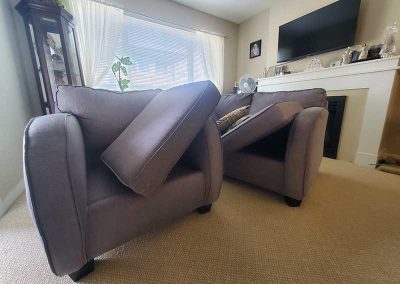
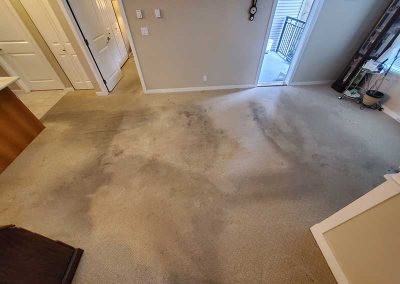
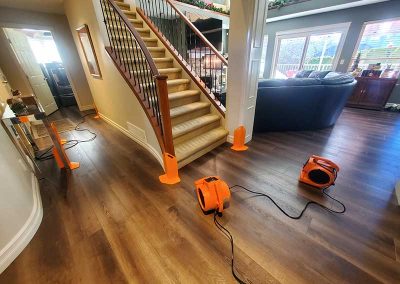
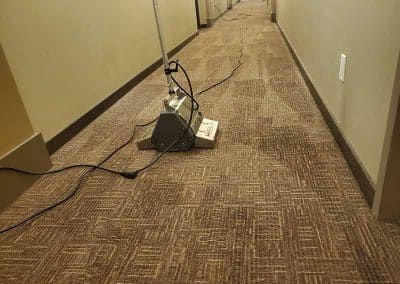
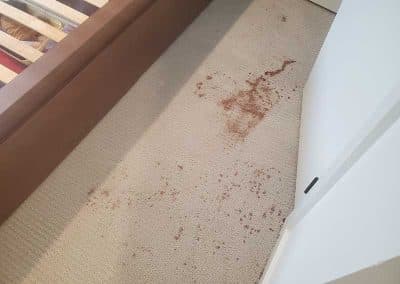
We take tremendous pride in the results we deliver for our clients. The photos speak for themselves.
Why Choose Us
Business License, Criminal Record Check, Trained Technicians, Professional Tools, Professional Solutions, Better Results and Quality, Transparent Pricing and no Hidden Fees, Health Benefits, Professional Operation of Tools, Mobi Cleaning Difference, Flexible Scheduling, On-Time, Maintenance, Great Competitive Value, Customer Satisfaction Focused, IICRC Trained, Green Cleaning, Reputation, Property Protection, Fast Drying Carpets, 100 Percent Satisfaction Guarantee, Experience, Professional Processes, First-Class Service, Fast Response Time, Free Consultation and Estimates, Competitive Pricing and Dedicated Account Manager